
EdgeTheory Logo
CONTACT

Announcements

Looking for something specific?

Most Recent →

March 4, 2026
The ISIS Bombings in Iran: Narrative Signals of Extremist Resurgence

This report analyzes the 3 January 2024 bombing in Kerman as both a mass-casualty attack and a catalytic information event. It integrates geospatial indicators, narrative attribution patterns, and cross-platform information flows to assess how competing actors shaped and contested meaning in the aftermath across regional and transnational audiences.

On 3 January 2024, twin bombings near the grave of Qasem Soleimani in Kerman killed more than 90 people during a mass commemoration ceremony marking the fourth anniversary of his death in a U.S. drone strike. The attack was later claimed by Islamic State-Khorasan Province (ISIS-K), triggering an immediate information contest over attribution and strategic meaning.

The event illustrates how violent incidents function as both operational acts and narrative inflection points. ISIS-K framed the bombing as a sectarian strike against a Shi’a ritual gathering, while Iranian authorities embedded the event within their “axis of resistance” narrative and broader confrontation with Israel and the United States.

Read More >
March 2, 2026
Narratives That Rock the Cradle: Legitimacy Competition over the Strikes on Iran

This EdgeTheory Narrative Insight report examines how political legitimacy was contested in real time following the February 28, 2026 U.S.–Israeli strike that killed Iran’s Supreme Leader and senior IRGC officials.

Drawing on cross-platform collection—including Telegram, X, state-aligned media, diaspora networks, and diplomatic channels—the report tracks how narratives fragmented within minutes of the strike. Competing frames quickly took shape: martyrdom and resistance, regime decapitation, escalation warnings, sovereignty violations, and doubt about the reported death.

The analysis details how AI-generated imagery, recycled combat footage, religious symbolism, and coordinated state messaging accelerated distrust and conflict-aversion narratives—often shaping perception before verification cycles stabilized.

The event illustrates how modern military operations now unfold simultaneously across kinetic and informational domains, where legitimacy is contested in real time.

Read More >
February 24, 2026
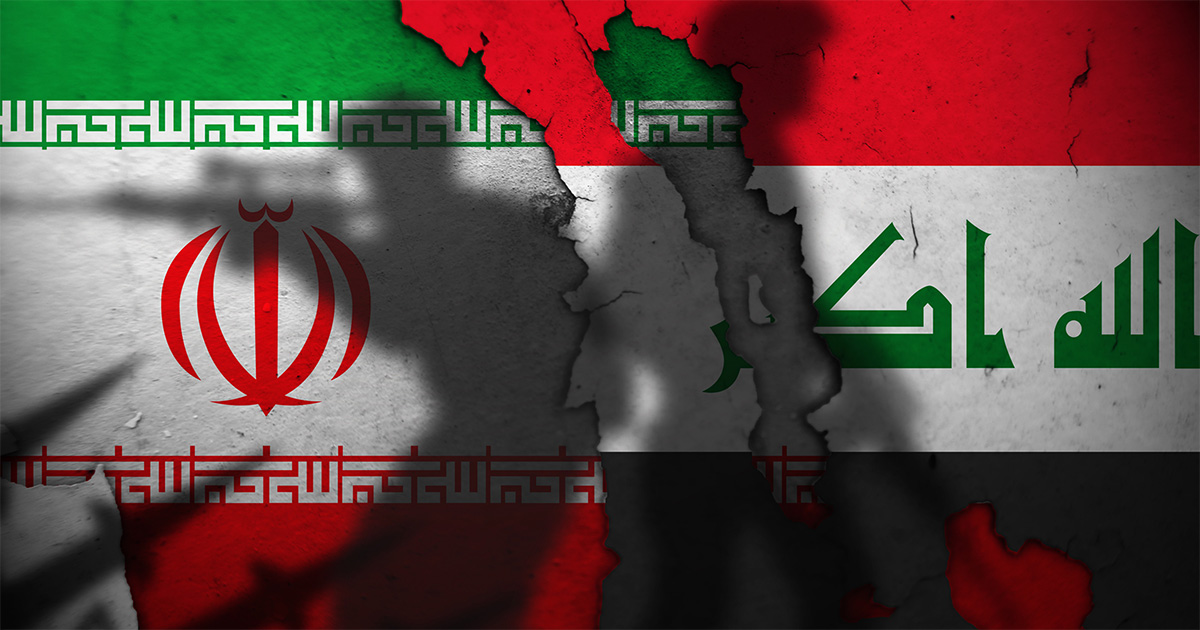
Iran-Backed Parties Poised to Take Iraq Backwards With Nomination of Nouri Al-Maliki

This EdgeTheory Narrative Intelligence report examines how the nomination of Nouri Al-Maliki for a third term is reshaping Iraq’s information environment — and what that reveals about Iranian influence, sectarian risk, and U.S. strategic exposure.

Drawing on narrative volume tracking, emotional language analysis, and amplification mapping across Iraqi, Kurdish, militia-affiliated, and international sources, the report identifies spikes in anger-laden and instability-focused narratives following the announcement. Coverage surrounding U.S. pressure, Kurdish political negotiations, ISIS prisoner transfers, and security transition timelines demonstrates how perception battles are unfolding alongside political maneuvering.

Rather than viewing the nomination as a routine leadership contest, the analysis shows how narrative dynamics are amplifying instability risk — potentially influencing coalition negotiations, protest mobilization, and international policy response long before a prime minister is confirmed.

Read More >
February 17, 2026
Islamist AI Deepfakes: Detecting ISIS Recruitment Narratives

This report synthesizes geospatial indicators, narrative attribution, and networked information flows related to Islamic State recruitment, propaganda dissemination, and operational signaling in the contemporary digital environment. Drawing on multi-platform collection streams—including Telegram channels, X posts, online newsletters, open-source media reporting, and extremist-affiliated publications—the analysis maps how jihadist narratives originate, adapt, and amplify across regions and audiences.

Read More >
February 3, 2026
Xi's PLA Purge and the Looming Invasion of Taiwan

This EdgeTheory report synthesizes geospatial, narrative attribution, and network analysis surrounding Chinese military activity around Taiwan in late December 2025 and early January 2026, with a focus on the large-scale "Justice Mission 2025" exercises.

Drawing from multi-platform collection streams—including websites, social media actors, RSS feeds, and X posts—the brief maps how competing narratives about PLA drills, deterrence signaling, sovereignty assertion, and regional escalation propagate across the global information environment.

The report employs EdgeTheory's network-detection, emotion-classification, and narrative-amplification tools to trace how state-affiliated amplifiers, Taiwan-focused security monitors, U.S.-based analysts, Russian-aligned commentators, and other actors interact and reinforce messaging. In doing so, it provides a layered view of how information power, emotional framing, and geopolitical competition intersect to shape public understanding of the exercises and the risks of broader Asia-Pacific friction.

Read More >
January 30, 2026
How Vaccine Narratives Are Shaped and Amplified Across US Media

This EdgeTheory Narrative Intelligence report examines how vaccine-related narratives are constructed, amplified, and escalated across ideologically distinct U.S. media ecosystems—revealing how identical health signals produce sharply different interpretations, pressures, and behavioral responses.

Drawing on parallel narrative briefs covering the same time window, the analysis traces how measles outbreaks, CDC guideline changes, flu severity, legal challenges, and global health developments are framed differently depending on source ecosystem and audience identity. Rather than evaluating medical accuracy or public health policy, the report focuses on how meaning is assigned, where emotional pressure accumulates, and why narrative momentum often precedes measurable shifts in trust, behavior, and institutional response.

By mapping narrative themes, emotional framing, escalation patterns, and source alignment, the report shows why vaccine narratives are not fixed problems to correct—but dynamic environments organizations must understand and navigate in high-scrutiny markets where perception moves faster than data.

Read More >
January 21, 2026
Narratives As Proxies - The External Exploitation of the Thailand-Cambodia Conflict

This EdgeTheory report synthesizes geospatial, narrative attribution, and network analysis surrounding the 2025 Thailand-Cambodia border conflict, specifically focusing on pro-Chinese narratives that position Beijing as a stabilizing mediator amid escalating clashes. Drawing from multi-platform collection streams, including websites, social media actors, RSS feeds, and X posts, this brief maps how competing narratives about mutual blame, failed ceasefires, and geopolitical proxy elements propagate across the global information environment. The report uses EdgeTheory’s network-detection and narrative-amplification tools to trace how nationalist and diplomatic actors organize, interact, and reinforce messaging—particularly alarmist pro-Thai claims of Cambodian aggression versus skeptical pro-Cambodian depictions of Thai opportunism—providing a layered view of how information power shapes perceptions of regional instability and the risk of wider US-China rivalry.

Read More >
January 19, 2026
The Iranian Protest Movement: Narrative Intelligence Detects the Ground Truths

This EdgeTheory Narrative Intelligence report examines the 2026 Iranian protest cycle through the lens of information power, narrative competition, and foreign influence—revealing how perceptions of instability, legitimacy, and escalation are actively shaped in the global information environment.

Drawing on geospatial analysis, narrative attribution, and network detection across websites, social media, RSS feeds, and X, the report maps how narratives around economic collapse, state violence, foreign interference, and regime change propagate and reinforce one another. The analysis traces how state media, diaspora influencers, foreign-aligned information actors, and automated networks interact—using emotional framing and coordinated amplification to shape public understanding and policy risk.

Rather than treating protests as isolated events, the report shows how narrative dominance has become a decisive factor in crisis escalation, influencing legitimacy and international response long before ground truth can be independently verified.

Read More >
January 15, 2026
Even When They Lose, They Win: Iran-Friendly Parties Join Forces to Dominate Iraq’s Post-Election Negotiations

This EdgeTheory Narrative Analysis examines how power is consolidated in Iraq after elections—through post-election negotiations and coordinated narrative control—viewed through the lens of Iranian influence.

The report analyzes how Iran-aligned political actors moved quickly following the recent elections to shape legitimacy—treating the vote as a procedural step, not the decisive moment. As results settled, coordinated post-election narratives shifted attention away from electoral outcomes and toward coalition formation, procedural milestones, and claims of inevitability.

Rather than contesting results directly, these narratives worked to define how government formation would be understood and accepted.

The analysis details how post-election narratives were:

  • Coordinated across party-affiliated media, political messaging, and aligned network
  • Reinforced during key negotiation and parliamentary moments
  • Structured to marginalize election winners and normalize coalition-driven outcomes

By shaping narratives around inevitability, stability, and consensus, post-election negotiations become the real arena of power.

Read More >
January 11, 2026
The Perception War over Venezuela

This EdgeTheory report synthesizes geospatial narrative mapping, narrative attribution, and emotion and network analysis surrounding the U.S. military capture of Nicolás Maduro in Venezuela. The brief focuses on coordinated Russian and Chinese information operations that frame the action as illegal aggression and resource-driven imperialism while positioning Moscow and Beijing as defenders of sovereignty and international law. Drawing from multi-platform collection streams, including state media, social media actors, RSS feeds, and X posts, this assessment maps how narratives of U.S. illegitimacy, neocolonialism, and the collapse of the rules-based order propagate across the global information environment. Using EdgeTheory’s narrative classification and amplification tools, the report traces how state-aligned, proxy, and influence-for-hire networks organize, interact, and reinforce emotionally charged messaging, providing a layered view of how adversarial information power seeks to undermine U.S. credibility, fracture allied cohesion, and normalize a sphere-of-influence model of global order.

Read More >
1 2 3 73

AI-Powered Narrative Intelligence For Decision Advantage

Detect, Assess, Shape

chevron-down