
EdgeTheory Logo
CONTACT

Announcements

Looking for something specific?

Most Recent →

January 21, 2026
Narratives As Proxies - The External Exploitation of the Thailand-Cambodia Conflict

This EdgeTheory report synthesizes geospatial, narrative attribution, and network analysis surrounding the 2025 Thailand-Cambodia border conflict, specifically focusing on pro-Chinese narratives that position Beijing as a stabilizing mediator amid escalating clashes. Drawing from multi-platform collection streams, including websites, social media actors, RSS feeds, and X posts, this brief maps how competing narratives about mutual blame, failed ceasefires, and geopolitical proxy elements propagate across the global information environment. The report uses EdgeTheory’s network-detection and narrative-amplification tools to trace how nationalist and diplomatic actors organize, interact, and reinforce messaging—particularly alarmist pro-Thai claims of Cambodian aggression versus skeptical pro-Cambodian depictions of Thai opportunism—providing a layered view of how information power shapes perceptions of regional instability and the risk of wider US-China rivalry.

Read More >
January 19, 2026
The Iranian Protest Movement: Narrative Intelligence Detects the Ground Truths

This EdgeTheory Narrative Intelligence report examines the 2026 Iranian protest cycle through the lens of information power, narrative competition, and foreign influence—revealing how perceptions of instability, legitimacy, and escalation are actively shaped in the global information environment.

Drawing on geospatial analysis, narrative attribution, and network detection across websites, social media, RSS feeds, and X, the report maps how narratives around economic collapse, state violence, foreign interference, and regime change propagate and reinforce one another. The analysis traces how state media, diaspora influencers, foreign-aligned information actors, and automated networks interact—using emotional framing and coordinated amplification to shape public understanding and policy risk.

Rather than treating protests as isolated events, the report shows how narrative dominance has become a decisive factor in crisis escalation, influencing legitimacy and international response long before ground truth can be independently verified.

Read More >
January 15, 2026
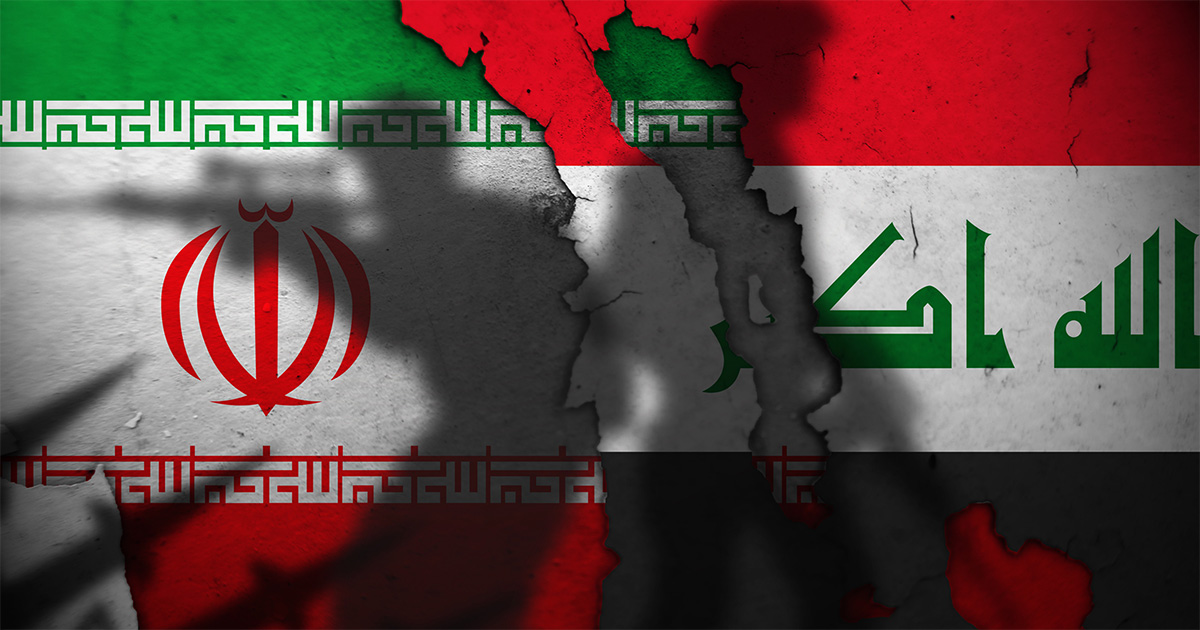
Even When They Lose, They Win: Iran-Friendly Parties Join Forces to Dominate Iraq’s Post-Election Negotiations

This EdgeTheory Narrative Analysis examines how power is consolidated in Iraq after elections—through post-election negotiations and coordinated narrative control—viewed through the lens of Iranian influence.

The report analyzes how Iran-aligned political actors moved quickly following the recent elections to shape legitimacy—treating the vote as a procedural step, not the decisive moment. As results settled, coordinated post-election narratives shifted attention away from electoral outcomes and toward coalition formation, procedural milestones, and claims of inevitability.

Rather than contesting results directly, these narratives worked to define how government formation would be understood and accepted.

The analysis details how post-election narratives were:

  • Coordinated across party-affiliated media, political messaging, and aligned network
  • Reinforced during key negotiation and parliamentary moments
  • Structured to marginalize election winners and normalize coalition-driven outcomes

By shaping narratives around inevitability, stability, and consensus, post-election negotiations become the real arena of power.

Read More >
January 11, 2026
The Perception War over Venezuela

This EdgeTheory report synthesizes geospatial narrative mapping, narrative attribution, and emotion and network analysis surrounding the U.S. military capture of Nicolás Maduro in Venezuela. The brief focuses on coordinated Russian and Chinese information operations that frame the action as illegal aggression and resource-driven imperialism while positioning Moscow and Beijing as defenders of sovereignty and international law. Drawing from multi-platform collection streams, including state media, social media actors, RSS feeds, and X posts, this assessment maps how narratives of U.S. illegitimacy, neocolonialism, and the collapse of the rules-based order propagate across the global information environment. Using EdgeTheory’s narrative classification and amplification tools, the report traces how state-aligned, proxy, and influence-for-hire networks organize, interact, and reinforce emotionally charged messaging, providing a layered view of how adversarial information power seeks to undermine U.S. credibility, fracture allied cohesion, and normalize a sphere-of-influence model of global order.

Read More >
January 7, 2026
EdgeTheory and NCNI Answer Our Nation’s Call for AI and Cognitive Warfare

Supporting the 2026 NDAA (National Defense Authorization Act), we’re working with 8th POG to train special operations forces on AI and cognitive warfare. We thank COL Robert Cusick, CSM Casey Kendall, Joe Stradinger, Nate Flake, Dr. Doowan Lee, and Dan Brookes for making this possible. The NDAA explicitly calls out cognitive warfare as an urgent […]

Read More >
December 26, 2025
AI- Enabled Cyber Operations: Narrative Intelligence Detects How Chinese Actors Weaponize AI

This EdgeTheory report synthesizes geospatial, narrative attribution, and network analysis surrounding the use of Artificial Intelligence by state actors, specifically those linked to China, to automate cyber-enabled espionage. Drawing from multi-platform collection streams, including technical forums, social media, and Chinese-language outlets, this brief maps how narratives about AI-driven hacking, state capabilities, and regulatory urgency propagate across the global information environment. The report uses EdgeTheory’s network-detection and narrative-amplification tools to trace how both alarmist and skeptical actors organize, interact, and reinforce messaging, providing a layered view of how information power shapes perceptions of a qualitatively new level of cyber threat.

Read More >
December 12, 2025
6 Reasons Narrative Intelligence Is Essential for Associations Today

Associations today operate across one of the most complex information environments in history. Whether representing agriculture, healthcare, retail, manufacturing, energy, or professional sectors, associations face a growing responsibility: understand how narratives and narrative intelligence is forming, accelerating, and influencing their members — before those narratives shape perception, policy, or risk. Traditional media monitoring still plays […]

Read More >
December 4, 2025
South China Sea Information Operations: EdgeTheory Detects Coordinated Narratives Targeting U.S. National Security

This EdgeTheory report synthesizes geospatial, narrative attribution, and network analysis surrounding escalating military activity and strategic signaling in the South China Sea. Drawing from multi-platform collection streams, including state media, regional outlets, and open-source social networks, this brief maps how competing narratives about sovereignty, maritime security, and alliance coordination propagate across the Indo-Pacific information environment. The report uses EdgeTheory’s network-detection and narrative-amplification tools to trace how both malign and friendly actors organize, interact, and reinforce messaging, providing a layered view of how information power shapes regional security dynamics.

Read More >
November 20, 2025
Narrative Intelligence Exposes Campaigns Manipulating Rare Earth Elements

EdgeTheory’s Global Cognitive Social Media Briefs provide a real-time window into how geopolitical narratives evolve, amplify, and influence global perception. In this brief, EdgeTheory’s AI-driven social media and narrative analytics unearthed coordinated messaging around China’s control of rare earth elements (REE)—critical materials underpinning both modern technology and defense systems. By combining geospatial narrative tracking with sentiment analysis, EdgeTheory revealed not only where conversations originate, but how they strategically move across the digital landscape, shaping interpretations of economic policy, sovereignty, and technological power.

Read More >
November 3, 2025
The Cognitive War over Counter-Narcotics Operations: Narrative Intelligence Reveals Networks of Global Adversarial Actors

This EdgeTheory report compiles a multi-source analysis of counter-narcotics operations across Latin America and the Caribbean, integrating narrative intelligence, geospatial data, and media signal mapping to trace the evolution of a rapidly developing regional dynamic. EdgeTheory’s narrative classifiers and geospatial analytics examine how U.S. military actions against alleged drug trafficking vessels intersect with information flows and public framing.

Read More >
1 2 3 73

AI-Powered Narrative Intelligence For Decision Advantage

Detect, Assess, Shape

chevron-down