
Menu
Traditional advisory models focus on events—policy changes, financial disclosures, competitive moves. But in contested industries, those events are often preceded by coordinated narrative activity that shapes how they will be received. For strategy and advisory firms, this creates a critical blind spot.
Clients are asking:
- Why is this happening?
- What does it mean for us?
- What should we do next?
But increasingly, the better question is: Who is shaping this perception—and to what end?
Firms that can answer that question move beyond reporting into true strategic interpretation.
This is where narrative intelligence changes the value proposition:
- From explaining events → to anticipating them
- From tracking competitors → to decoding influence
- From reactive guidance → to decision advantage
The following report examines the evolving narrative landscape surrounding China's Contemporary Amperex Technology Co. Limited (CATL) EV battery company to illustrate how information operations intersect with industrial strategy in high-stakes sectors. By tracing shifts in messaging before and after the company’s designation on the U.S. 1260H list, it highlights how state-aligned narratives are used to shape perceptions of legitimacy, innovation, and market leadership. The analysis is intended to support decision-makers across strategy, investment, and communications functions by demonstrating how narrative intelligence can reveal underlying intent, anticipate market developments, and enhance risk awareness in an increasingly contested global information environment.
The global competition surrounding advanced battery technologies—and the companies that produce them—is increasingly shaped not only by industrial capacity and innovation, but by the narratives that define how those capabilities are perceived. Contemporary market dynamics unfold in an information environment in which state-aligned actors actively promote, defend, and legitimize their strategic industries through coordinated messaging. In this context, China’s Contemporary Amperex Technology Co. Limited (CATL), the world’s dominant EV battery manufacturer, offers a revealing case study in how narrative construction operates alongside—and in support of—broader economic and geopolitical objectives.
This report examines how Beijing’s messaging around CATL evolved before and after the U.S. Department of Defense designated the company under the 1260H list, and how those narratives continue to shape global perceptions today. By analyzing shifts in tone, theme, and amplification patterns across media ecosystems, the report highlights the strategic intent embedded within these narratives and the role they play in influencing investors, regulators, and industry stakeholders. Ultimately, it argues that narrative intelligence provides a critical lens for understanding not just what is happening in strategic industries, but how and why those developments are being positioned to shape decision-making at every level.
While the 1260H designation itself is not a blanket ban on doing business, it does trigger a cascade of financial and reputational consequences.
Across the reporting period, the narrative environment becomes more concentrated and consistent following external pressure events, rather than diversifying, suggesting an adaptive rather than purely organic media ecosystem.
Before the DoD added CATL to its list of Chinese military-affiliated companies, Beijing's state-aligned narratives looked very different from how they appear today. Its messaging emphasized innovation, competition, and market disruption. With regard to CATL's EV skateboard chassis and Bedrock technology, for instance, China's narrative output highlighted the company's design capabilities and superior product line.
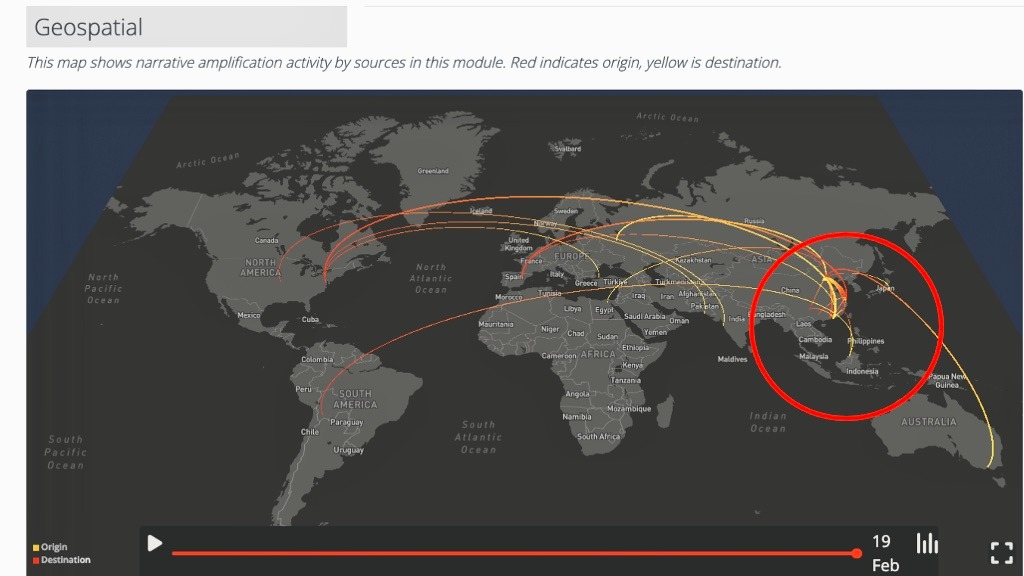
January 2025 - A spike in narratives promoted and amplified by Chinese and China-affiliated actors promoting CATL’s tech superiority. The audience is a global one that includes Americans
Chinese narratives also sought to bolster CATL's legitimacy by highlighting the firm's various European ventures, including an expansion of its battery plant in Spain. At the very least, the messaging implied that Western consumers (and governments) could view CATL as a reliable provider of alternative energy. If CATL was already operating in Europe and the U.S., then it must be a consistently dependable supplier of car batteries and similar products.
Beijing's messaging also emphasized CATL's overall market share, describing the firm as dominating its competition. There was much truth to this narrative, as well. Prior to any regulatory shocks, CATL controlled roughly 35–40% of the global EV battery market, with a clear trajectory of increasing dominance and no close competitor at scale.
Earlier benchmarks showed a 36–37% share in 2022 and 2023, indicating steady growth. Finally, CATL's market share surged even higher (45%) in early 2026, underscoring just how concentrated the EV battery market had become.
This messaging reinforced CATL’s positioning as a market leader, while its market share continued to rise over the same period. The narrative was amplified through a network of Chinese state media, Chinese-aligned outlets, and international sites within the Haixun network—a distributed system of inauthentic news platforms linked to a Chinese public relations firm.
The amplification pattern shows characteristics of coordination, including consistent themes across aligned sources and distribution through specific outlet types. It relied on specific source types, driving specific narrative themes to specific geographic audiences. This messaging appeared effective, as well. As we have already seen, CATL's market share rose steadily, albeit incrementally, between 2022 and 2026.
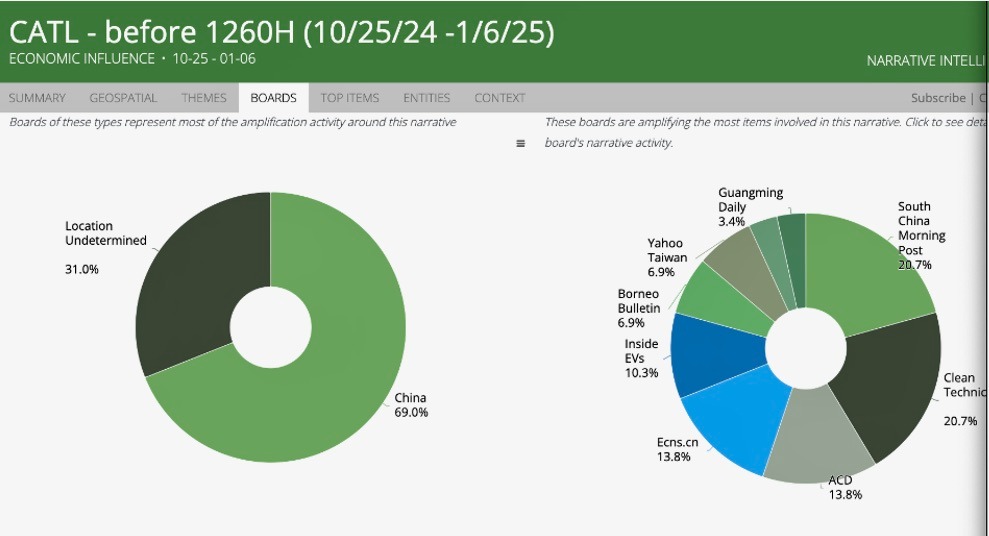
The breakdown of Chinese CATL messaging before the 1260H listing. Nearly 70 percent of all content originated in China. The pie chart on the right displays the leading publications contributing to the narrative.
Then, in early January of 2025, the Department of Defense (DoD) added CATL to the infamous 1260H list, a DoD roster of "Chinese military companies" operating in the U.S. The entities on this list are said to be assisting with the modernization of China's People's Liberation Army (PLA), to the detriment of American national security. Companies placed on the 1260H list face significant restrictions on defense contracts, reputational damage, and increased compliance scrutiny. Key penalties include a ban on DoD contracting by June 2026, restrictions on supplying components to DoD by June 2027, and potential investment bans on their publicly traded securities.
At this point, Beijing's narrative output about CATL began to shift. No longer was the focus on sustaining the company's legitimacy in the marketplace. Now the messaging became part of a concentrated effort to undermine not only CATL's inclusion on the 1260H list, but the very existence of the list itself. It wasn't merely CATL that was being targeted, after all, but a whole array of Chinese firms believed to be aiding the PLA even as they sold goods and hardware to the U.S. military. China's role as a military supplier was suddenly facing a serious challenge.
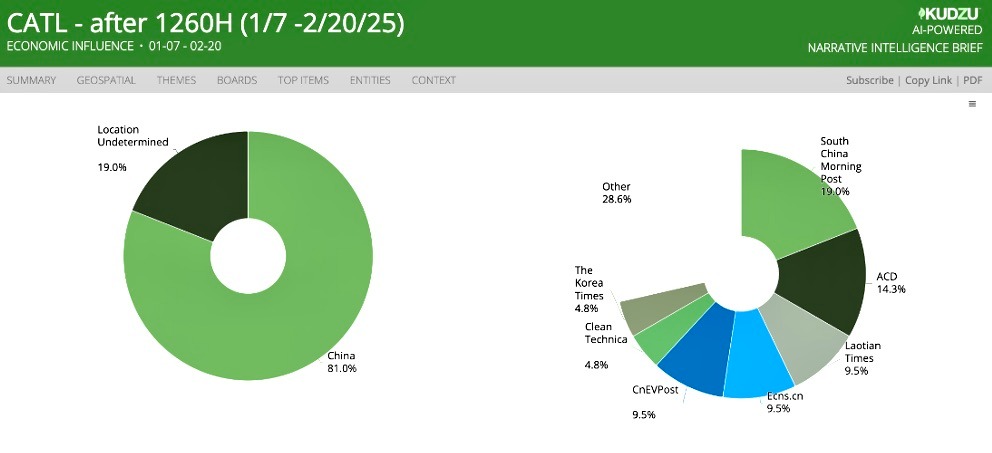
Narrative distribution immediately after CATL's 1260H designation. The metrics suggest that China took greater control of the narrative, increasing its overall share to 81%.
In response, Beijing began publishing narratives that challenged the legitimacy of the DoD's actions. First, it questioned the motives behind CATL's suspension as a military vendor, claiming the move was informed by political reasons, rather than security considerations. China Daily, for instance, declared that accusations of collusion with the PLA were merely a pretext "for Washington to carry out its long-arm jurisdiction." Rather than considering its own security needs, Washington was "resorting to the law of the jungle" in order to "counteract what it (saw) as Beijing's efforts to seek breakthroughs in high technology."
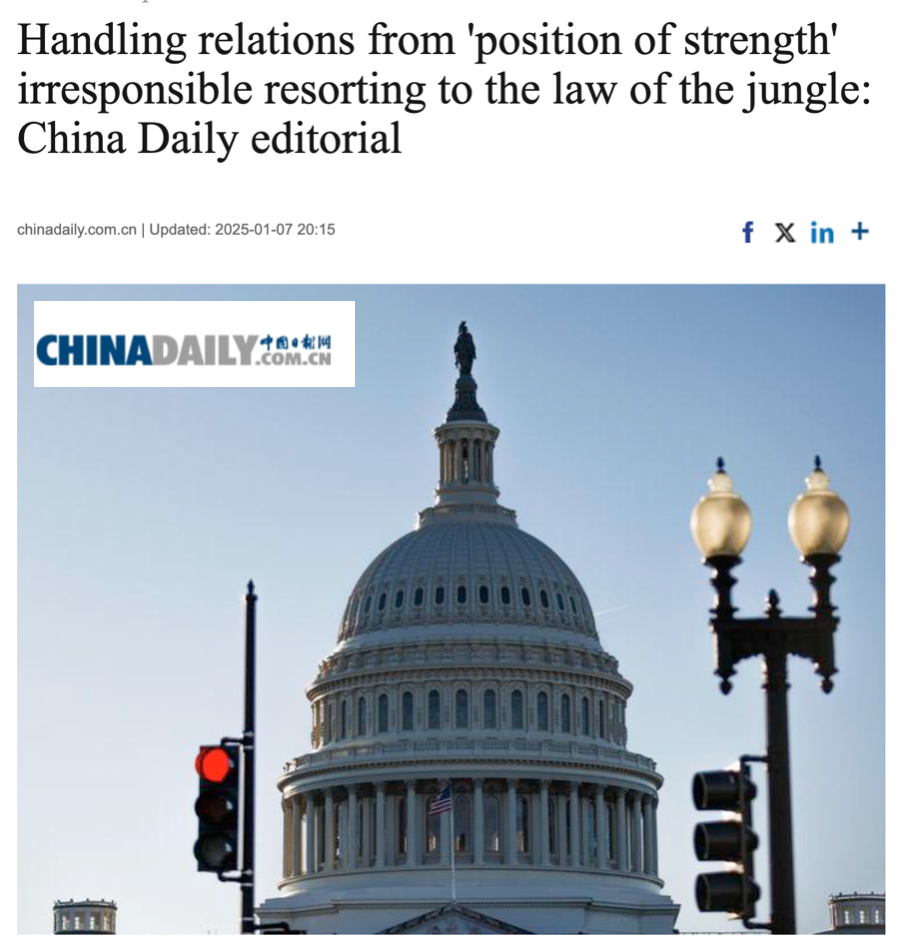
Narrative item published by China Daily on January 7th, 2025.
Beijing also rolled out narratives emphasizing CATL's various market successes and at least implying that the 1260H designation bore no consequences for the battery firm. CATL's 2025 Hong Kong IPO listing, for example, allowed Chinese propagandists to at least create the impression that CATL still had access to Western capital markets, despite the listing. China's Global Times was exemplary of this approach, boasting that the IPO "attracted investments from sovereign wealth funds, industrial capital, long-term institutional investors, insurance funds, and multi-strategy funds from 15 countries and regions." (May 20, 2025)
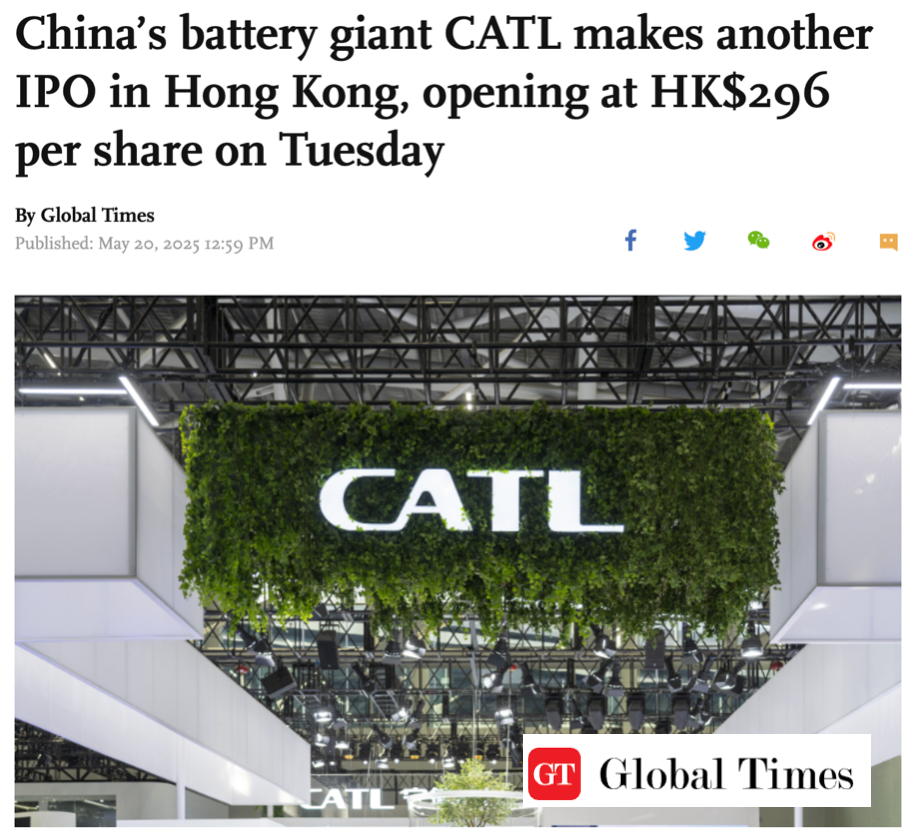
Narrative item published by Global Times on May 20th, 2025.
Another tactic entailed countering the DoD's 'Chinese military' designation with technology leadership messaging. The implication here was that adding CATL to the 1260H list was foolhardy, given that CATL was one of many Chinese firms that could help the Pentagon achieve its military goals through advanced technology.
This line of messaging emphasized global innovation and partnership expansion, two key indicators of the company's health. Xinhua was only one of the many Chinese media outlets contributing to this narrative. In March of 2025, it reported that CATL's "all-solid-state battery research and development had entered the pre-mass production stage, featuring an energy density more than 30 percent higher than traditional liquid lithium batteries and a lifecycle exceeding 2,000 charges."
One way Beijing underscored CATL's technical innovation was by emphasizing its patent filings. If CATL was filing new patent applications, then it must be hard at work developing the next generation of advanced technologies. While narrative items focusing solely on CATL were few, there were plenty of items that depicted CATL as one of many Chinese firms leading the way in innovation. "Patent applications from China reached a record high in 2024," noted the Global Times on March 26, 2025, adding that CATL had submitted "1,163 European patent applications."
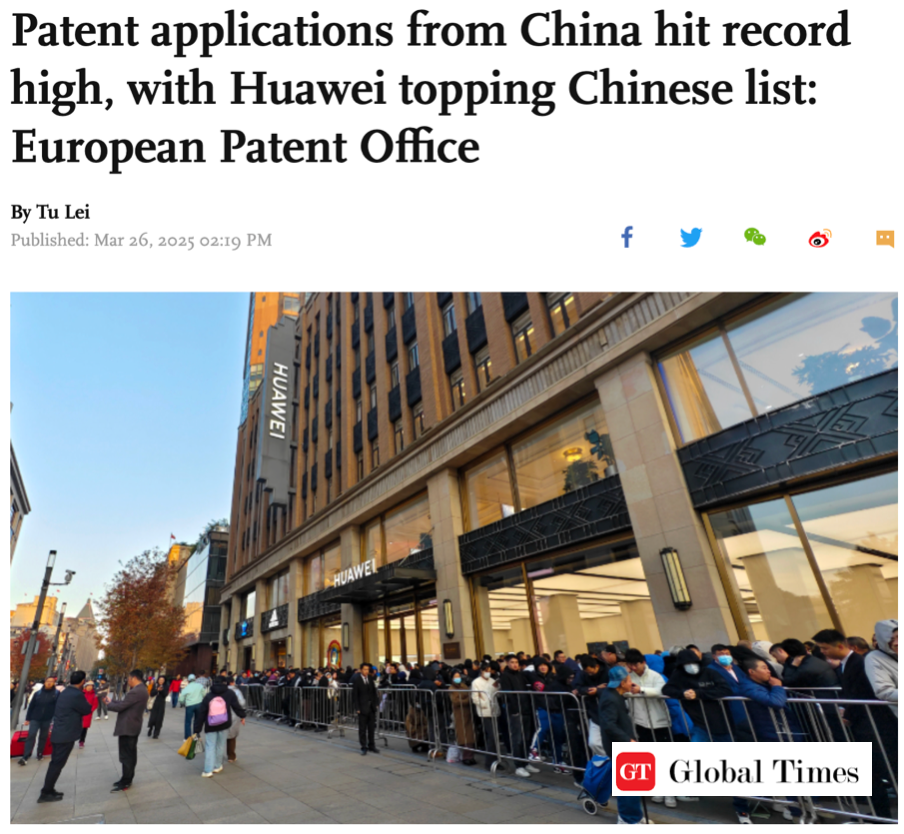
Narrative item published by Global Times on March 26th, 2025.
The speed and consistency of the narrative pivot following CATL’s 1260H designation suggests a coordinated response. The shift occurs across multiple aligned sources within a compressed timeframe, which is not typical of organic media behavior. Yet the shift in Beijing's CATL messaging happened virtually overnight. No sooner had the DoD listed CATL as a Chinese military firm than Beijing's network of state-sponsored media outlets began rolling out narratives intended to bolster CATL while simultaneously denigrating the DoD's procurement process. At the time, EdgeWatch Narrative Monitoring picked up coordinated promotion across multiple simultaneous sources — the surest fingerprint of an organized influence operation.
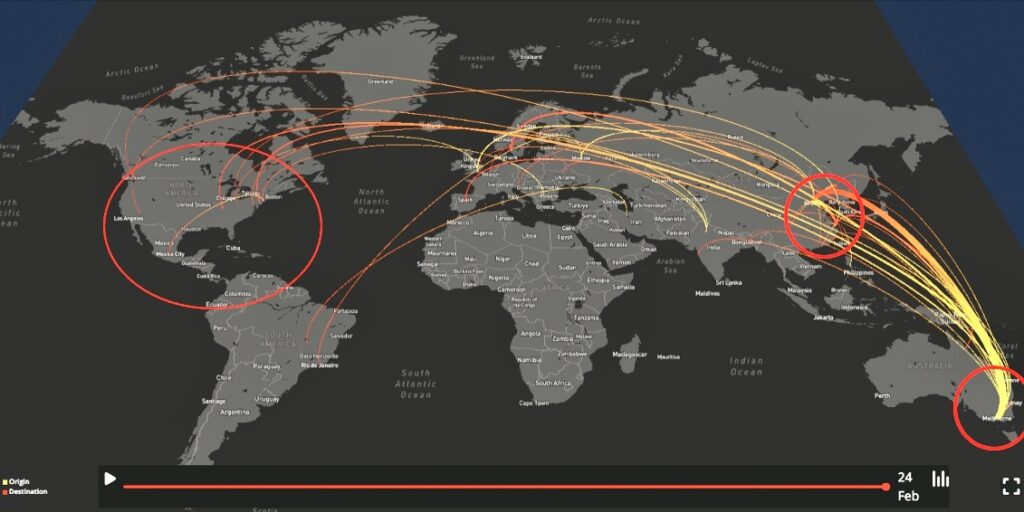
February 2025 - Narrative map of CATL patent messaging following its placement on the 1260H list. The sharp uptick in narratives from Australia is likely due to the addition of a China-aligned publication based in Melbourne.
A full year after CATL's DoD ban, Beijing's narrative operation remains ongoing. China’s efforts continue to exhibit consistent, coordinated messaging patterns, suggesting a deliberate attempt to shape global perceptions rather than an episodic backlash against an unfavorable policy. The motives behind this messaging are varied and include bolstering China's soft power, attracting foreign investment, supporting the Belt and Road Initiative (BRI), and countering negative claims about Chinese industry. Its framing of CATL's joint ventures in Europe, for instance, is designed to legitimize China's growing industrial footprint while promoting economic interdependence.
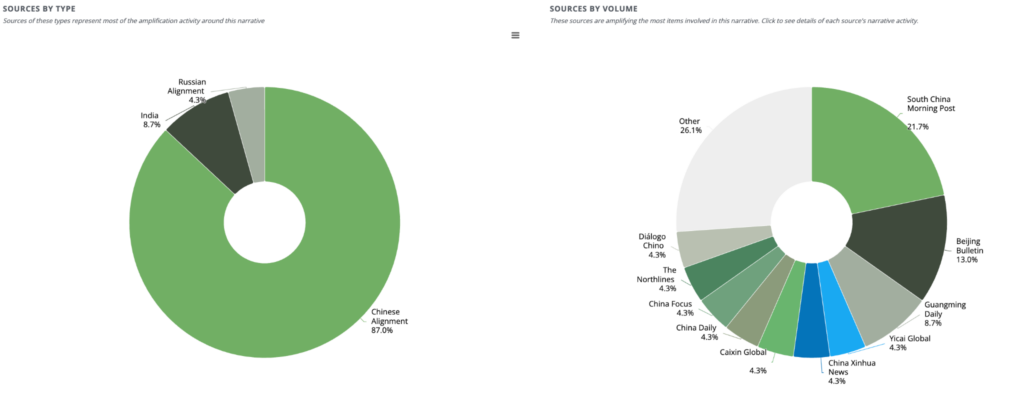
Narrative distribution as it stands in April 2026. Chinese-aligned sources account for a dominant share of coverage, increasing further following the 1260H designation rather than fragmenting.
These narratives emphasize not only corporate profits but also geographical growth. One recent example of this approach comes from the South China Morning Post (SCMP). On March 27th, SCMP quoted Meng Yang, a vice-minister of China's State Administration for Market Regulation, as saying that firms like CATL should “build a healthy competition ecosystem” in their overseas markets. If Chinese products were successful on the global market, Yang was implying, it was only because they were superior to the competition in one way or another, and not because of any unfair trade practices on the part of Beijing.

Narrative item published by South China Morning Post on March 27, 2026.
Xinhua has also contributed to this narrative of continued market growth. On March 11th, it published a narrative item describing a perceived slump in the European electric vehicle (EV) industry brought on by the rise of China's own green energy sector. The item labeled China's booming EV battery production as "a 'perfect storm' facing European carmakers, brought about by European automakers' inability to keep pace with Chinese innovation. "Chinese manufacturers have become increasingly competitive in EV production and technology, putting pressure on European brands both internationally and within Europe," the piece noted.
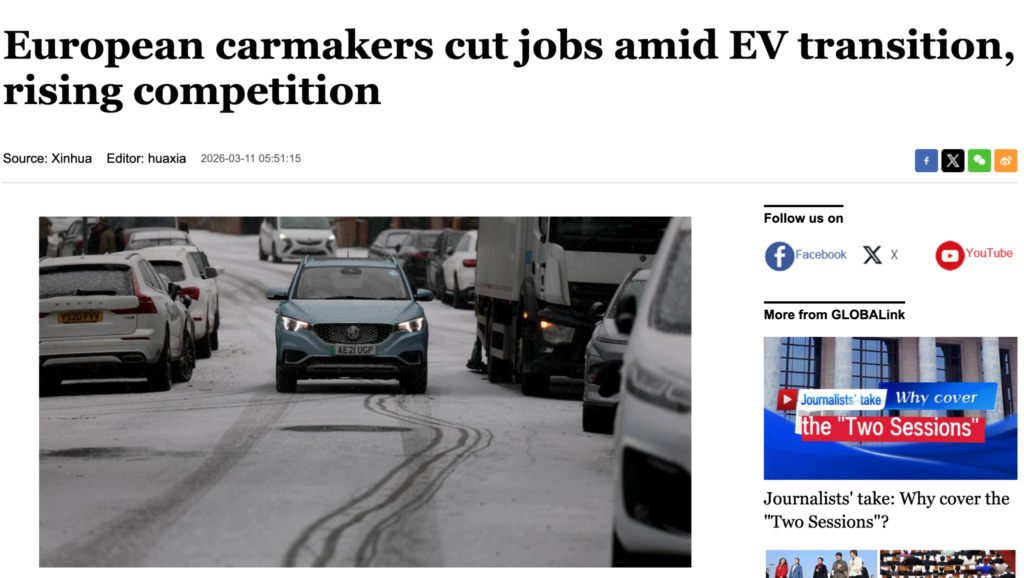
Narrative item published by Xinhua on March 11, 2026.
CATL's patent filings also form a major component of Beijing's narrative. Patent filings, after all, are not only an indicator of success, but of innovation as well. When it comes to patents, Beijing appears to prioritize CATL's Western filings over its Chinese ones. This is likely because Western activity offers proof that CATL is expanding beyond China's borders despite the DoD's attempts to inhibit its growth. On March 7th, for instance, China Economy published an intel noting that CATL "employs over 21,000 R&D personnel and has generated more than 50,000 patents." Moreover, "CATL's battery products power more than 20 million vehicles across dozens of countries and regions worldwide."
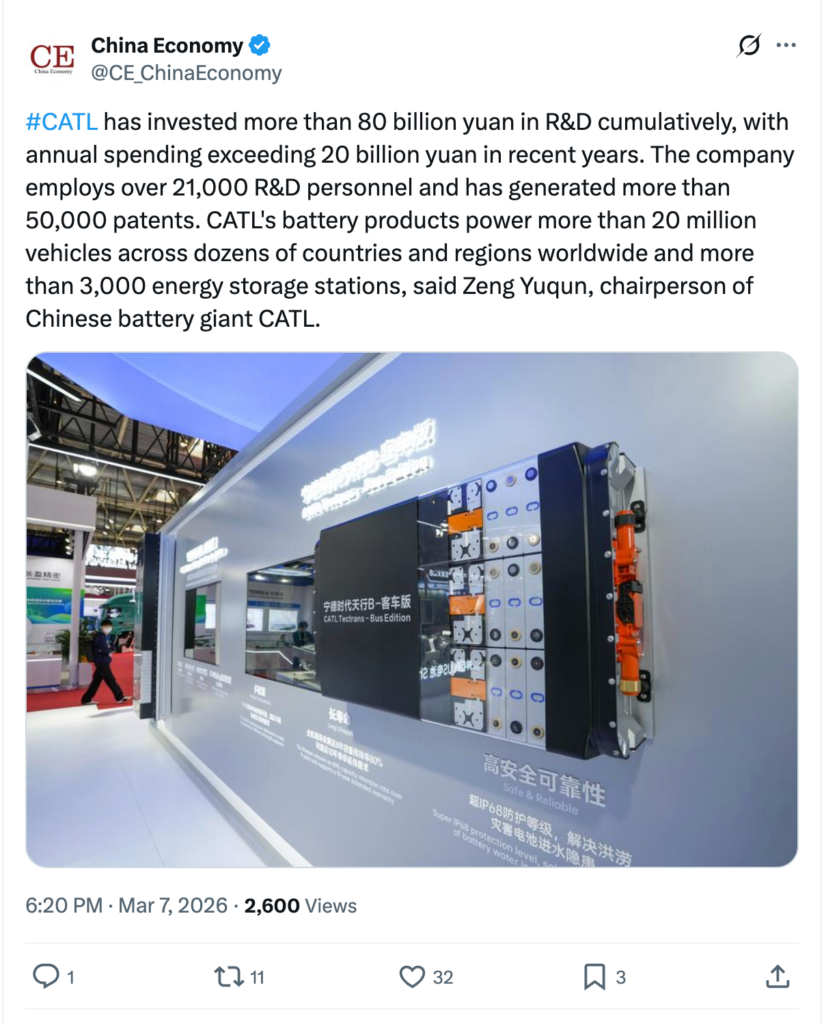
Narrative item published on X by China Economy on March 7, 2026.
It is important to keep in mind, however, that Beijing's narratives about CATL often extend beyond the company itself to encompass Chinese innovation as a whole. The Malaysian outlet Kosmo!, for example, ran an April 1st item declaring that Chinese R&D was now outpacing that of competing nations. "China enters top 3 for European patents for first time" ran the headline of a story telling readers that CATL had become the 10th-largest filer with the European Patent Office (EPO). "Applications at the EPO from China have tripled from 7,092 in 2016 to 22,031 in 2025, highlighting China’s strong and sustained growth," the story boasted.
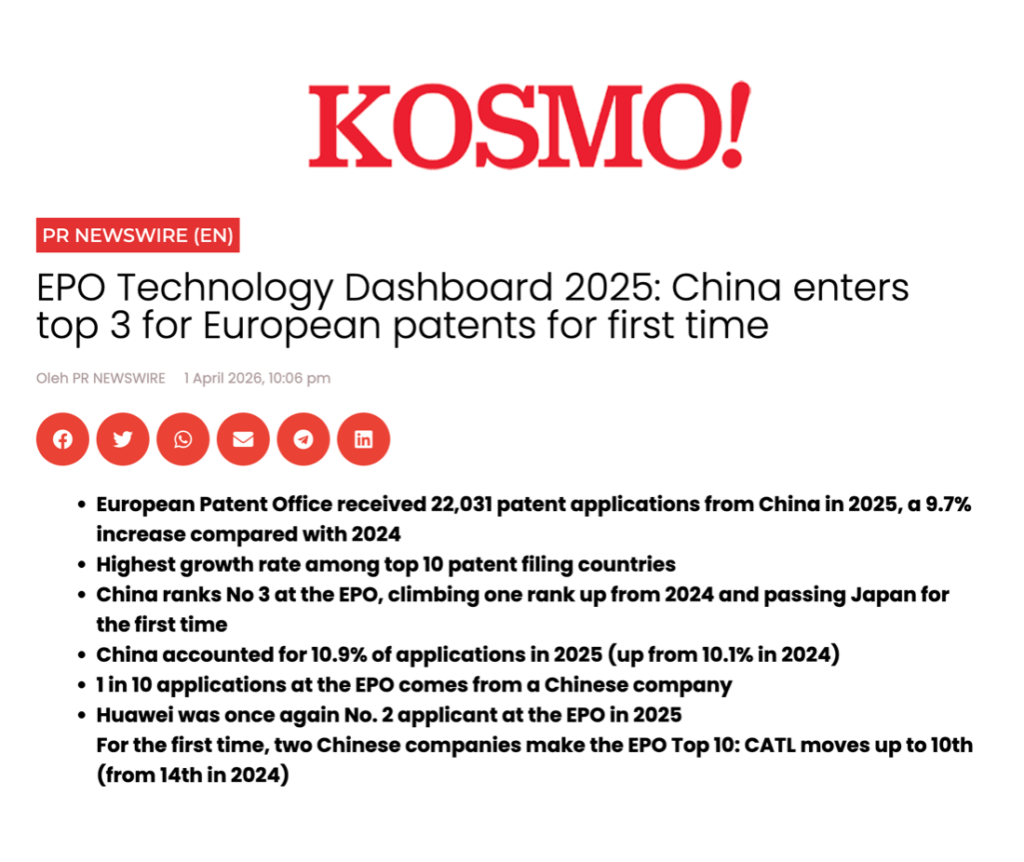
Narrative item published by Kosmo! on April 1, 2026.
Beijing also continues to defend CATL by showcasing its claims of technological superiority in solid-state battery development. Countercurrents told its readers on March 31st that the company recently "announced (it's) begun testing solid-state batteries in cars that can go 800 miles on a single charge." But it isn't just with lithium batteries that China is remaking the global EV market, the piece continues. "The Chinese (who are the masters of the battery game) have figured out how to do the same tricks with sodium," as well.
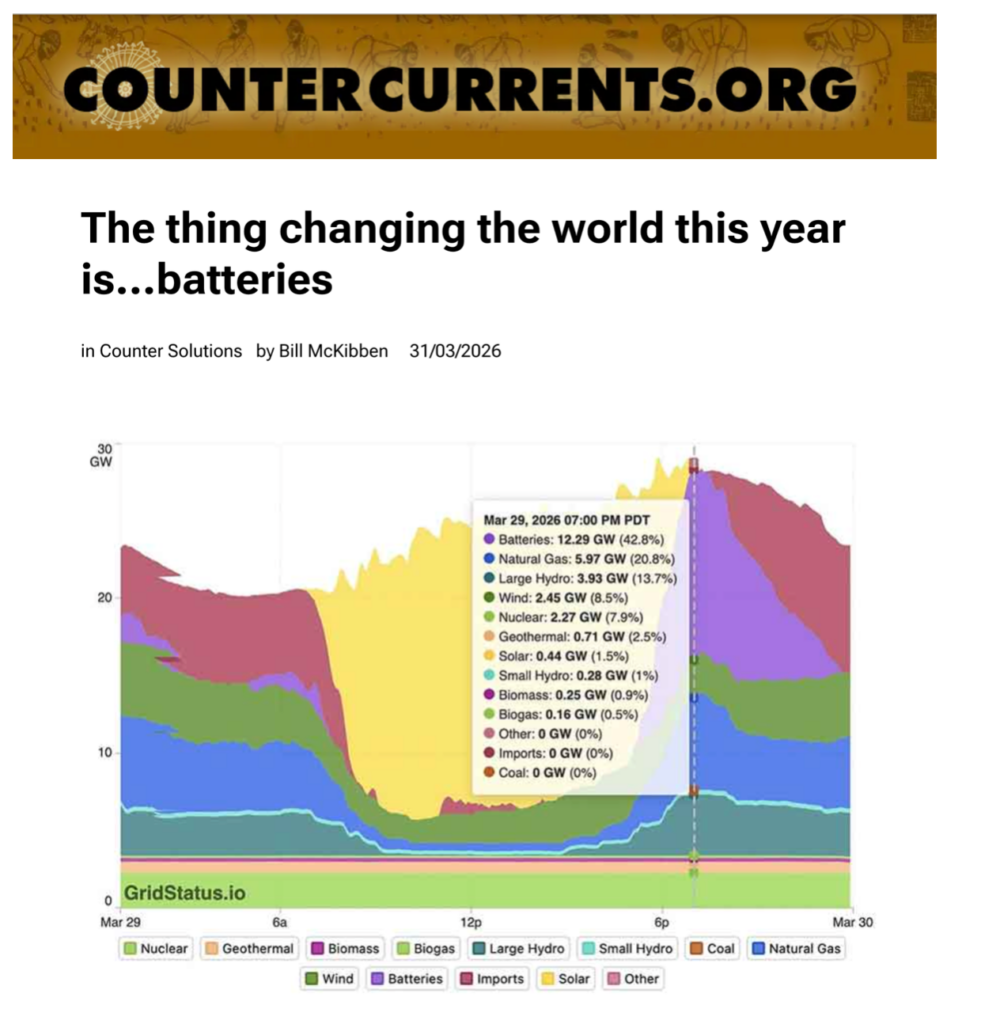
Narrative item published by Countercurrents on March 31, 2026.
Finally, some Chinese outlets have worked to keep CATL's IPO success on the Hong Kong market in the public eye. This is the case despite the fact that CATL completed its initial offering nearly a full year ago. Again, the emphasis is on Chinese success, rather than simply on CATL alone. In late January, Xinhua reported that the 19th Asian Financial Forum in Hong Kong "was abuzz with fortune-telling of 'the next CATL,' which raised over HK$35 billion last May."

Narrative item published by Xinhua on January 27, 2026.
Taken together, these narratives reveal a sustained and multifaceted effort by Beijing to recast CATL as both a symbol and a vehicle of China’s broader technological ascendancy. By emphasizing global expansion, competitive legitimacy, patent dominance, and breakthrough innovation, Chinese messaging seeks to normalize—and even celebrate—its industrial reach while deflecting scrutiny tied to the DoD ban. At the same time, the deliberate blending of CATL’s achievements with those of China’s wider R&D ecosystem reinforces a larger strategic claim: that China, not the West, is now setting the pace in critical future industries, and that attempts to constrain it are both ineffective and misguided.
CATL’s inclusion on the 1260H list introduces a layer of risk that extends well beyond the company itself, affecting firms that maintain commercial or contractual ties with it. While the designation does not prohibit all business activity, it can constrain access to U.S. capital markets, trigger investor divestment, and elevate compliance burdens for partners operating across jurisdictions.
Companies tied to CATL may face increased due diligence requirements, potential restrictions on financing, and heightened scrutiny from regulators and stakeholders. Just as importantly, reputational exposure can deter investors, complicate joint ventures, and introduce uncertainty into long-term strategic planning.
These pressures can also translate into tangible operational challenges. Firms relying on CATL for batteries or components may encounter supply chain disruptions if partnerships are scaled back or restructured under regulatory pressure. Insurance costs, shipping arrangements, and procurement timelines may all be affected as counterparties reassess risk. In this environment, narrative intelligence becomes a critical tool.
By tracking how CATL is framed across Chinese and global media ecosystems, companies can better anticipate regulatory shifts, reputational fallout, and market reactions—allowing them to adjust partnerships, diversify suppliers, and mitigate exposure before risks fully materialize.
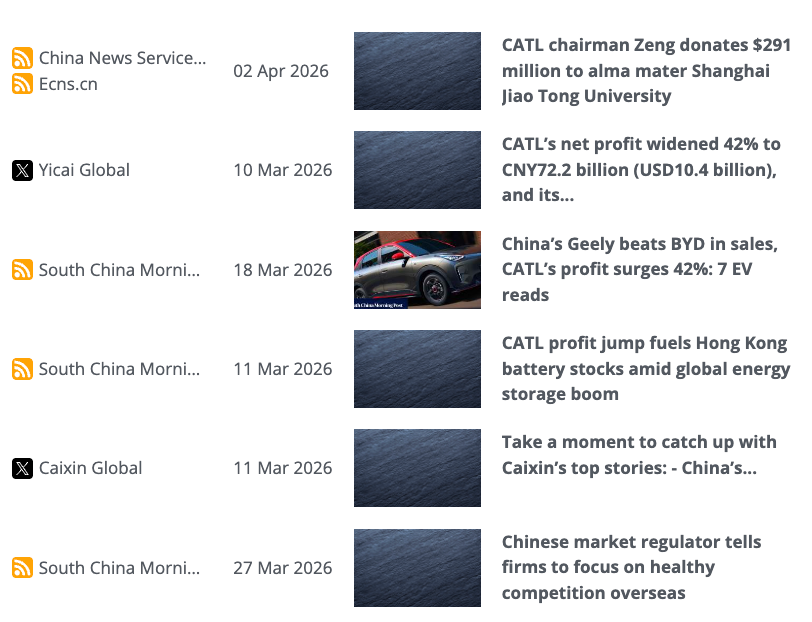
March-April 2026 - A sampling of pro-CATL narratives published by Chinese media outlets.
Strategy and advisory firms must recognize that the narrative environment surrounding CATL is not incidental. It is actively shaped to influence regulators and investors operating in the same space as their clients. Treating these narratives as signals rather than noise allows firms to identify the gap between public messaging and underlying strategic intent. This distinction provides a competitive advantage, enabling advisors to interpret developments not just as isolated events, but as part of a broader influence effort.
Firms that can move beyond surface-level reporting and explain why specific CATL narratives are being amplified—and by which actors—offer a higher tier of intelligence. This includes identifying coordinated messaging patterns, timing strategies, and target audiences, all of which provide insight across global markets. By integrating narrative intelligence into their advisory frameworks, these firms can help clients anticipate competitor moves, assess partnership risks, and make more informed strategic decisions in environments where perception and positioning are increasingly as important as fundamentals.
For investment due diligence, traditional analysis captures what CATL communicates about its technology, partnerships, and financial performance, but it often stops short of interrogating how those messages are constructed and distributed.
Narrative intelligence fills this gap by examining the coordination, timing, and amplification of those claims across media ecosystems. This approach allows investors to distinguish between organic market signaling and strategically orchestrated messaging designed to shape perception. In doing so, it reveals layers of intent that are not visible through financial disclosures or corporate announcements alone.
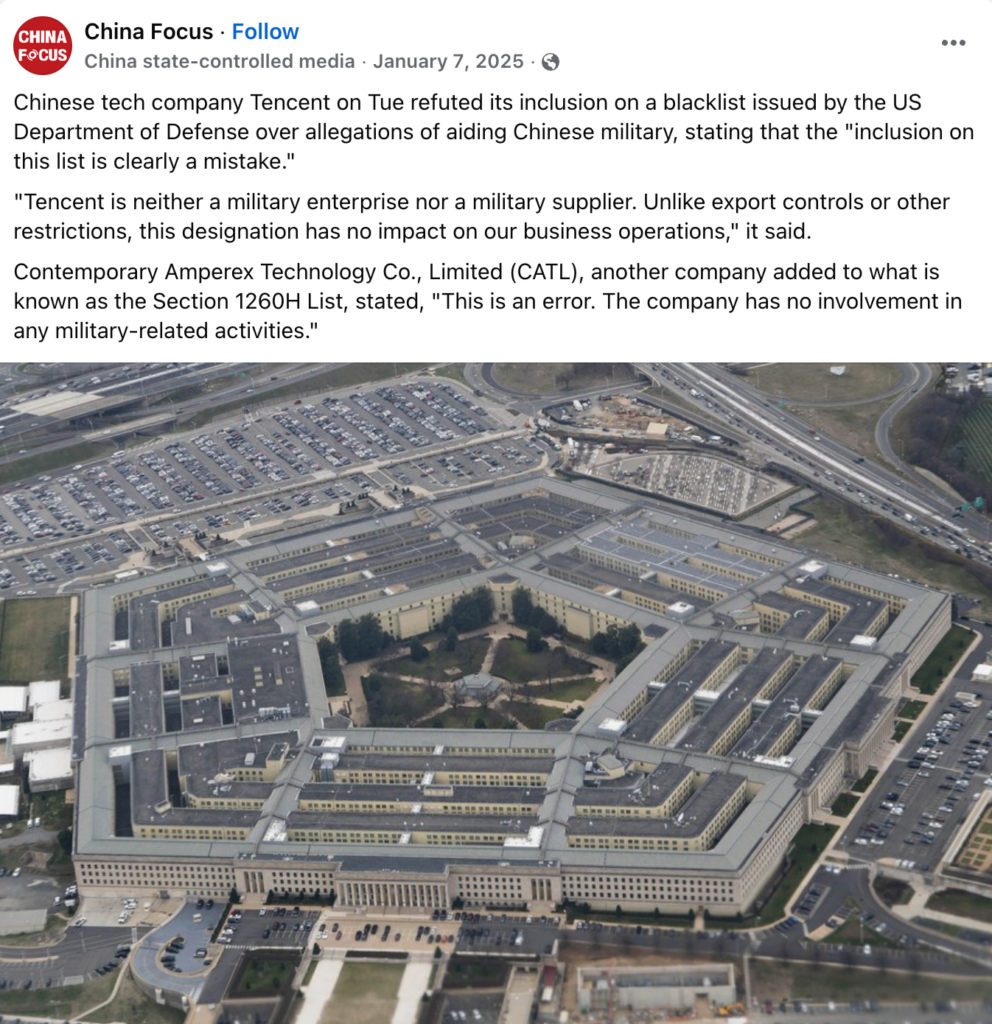
Narrative item published by China Focus on Facebook, 7 January 2025.
Mapping narrative patterns alongside key business events—such as patent filing surges timed around major fundraising efforts like the Hong Kong IPO—provides a more refined understanding of risk and opportunity. Tracking how these developments are echoed across state media, international outlets, and social platforms can indicate whether momentum is being manufactured. This added layer of analysis enables firms to better assess valuation narratives, identify potential overstatements of innovation or market position, and make more informed decisions in environments where perception management plays a critical role in shaping capital flows.
For corporate communications teams, Western EV and battery firms are not simply competing on product performance or market share. They are operating in a narrative environment shaped by coordinated messaging from Chinese competitors such as CATL. This messaging targets the same audiences—investors, policymakers, regulators, and industry stakeholders—while reinforcing perceptions of technological leadership and reliability. Without a clear understanding of how these narratives are constructed and disseminated, communications efforts risk becoming reactive or fragmented.
Analyzing the amplification patterns behind these narratives provides the foundation for a more strategic response. With this insight, corporate communications teams can better position their own messaging, anticipate points of competitive pressure, and proactively address emerging narratives before they gain traction. This enables firms to move from simple brand defense to narrative competition, ensuring their perspectives are not only heard but effectively integrated into the broader discourse, shaping policy direction.
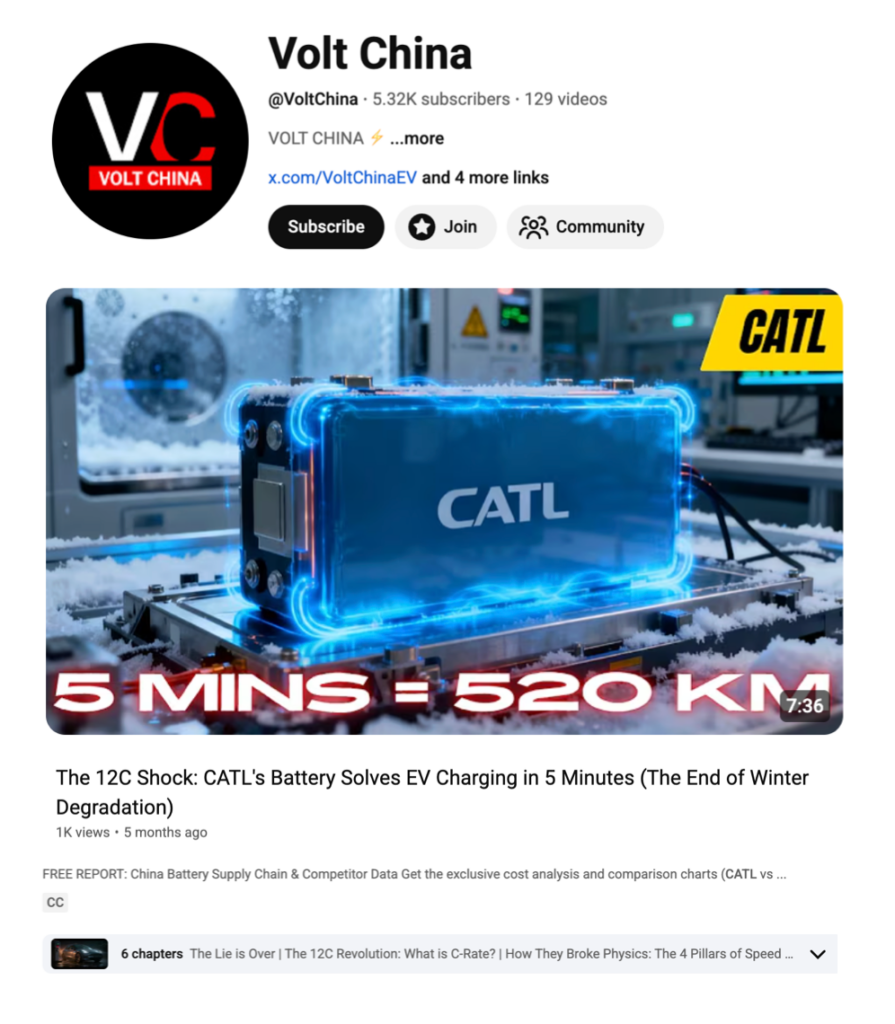
Pro-CATL narrative item published on YouTube, November 2025.
Taken together, this section underscores that CATL’s designation is not merely a regulatory event, but a catalyst for a broader contest over perception, risk, and market positioning. Financial exposure, supply chain vulnerability, and reputational pressure are all shaped not only by policy but by how that policy is interpreted and amplified across global information channels. For firms across strategy, investment, and communications functions, the ability to decode and respond to these narratives is no longer optional—it is central to effective decision-making. Those that integrate narrative intelligence into their risk frameworks will be better positioned to anticipate shifts, protect stakeholder confidence, and compete in an environment where influence operations increasingly shape economic outcomes.
The CATL case illustrates a broader dynamic across strategic industries in which Chinese state-aligned actors hold competitive stakes: narrative shaping is not reactive but preparatory. Messaging campaigns are deployed in advance of key business developments to establish legitimacy, reinforce credibility, and condition market expectations. The Hong Kong IPO was preceded by coordinated efforts to validate CATL’s global standing, while increased patent activity was paired with sustained emphasis on innovation leadership. Similarly, European expansion was framed in terms of partnership and cooperation before regulatory concerns could fully materialize, thereby smoothing the path to market entry.
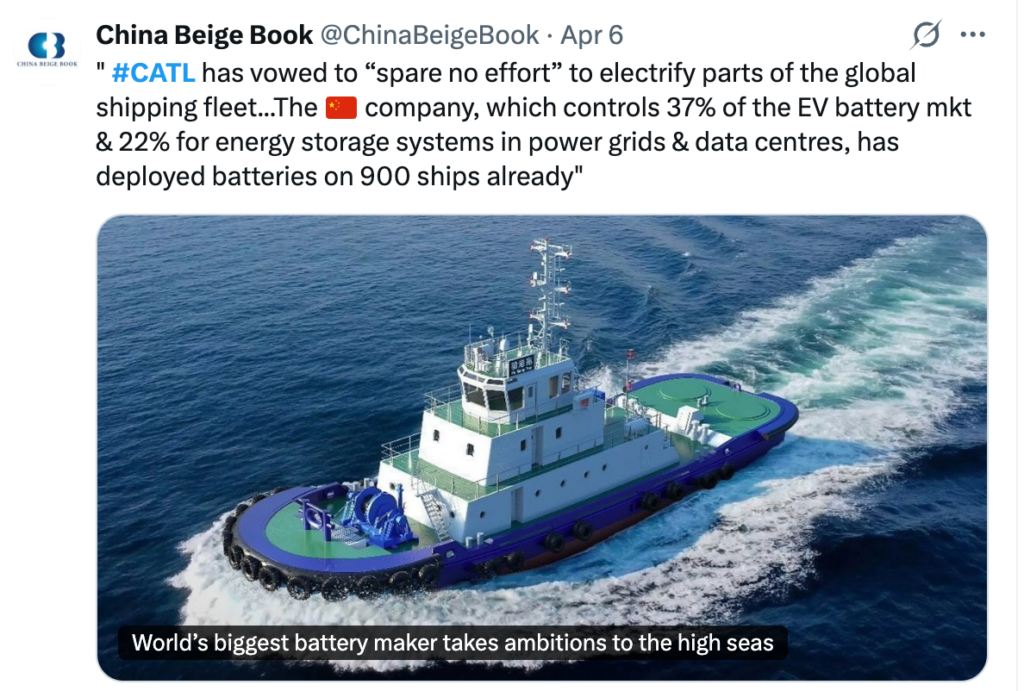
Pro-CATL Chinese narrative highlighting the company's technical innovation, published on X on April 6th.
Organizations capable of identifying these narrative patterns in their early stages gain access to a critical decision advantage. This advantage does not stem from possessing more data, but from interpreting the information environment more effectively and at an earlier point in the cycle. By recognizing how narratives are constructed and timed to support strategic objectives, firms can anticipate moves before they are formally executed. In contrast, organizations relying solely on conventional intelligence often encounter these developments only after they are already underway, limiting their ability to respond proactively in a rapidly evolving competitive landscape. The organizations that respond fastest are not always the ones that succeed. The ones with early foresight are.
In sum, the CATL case demonstrates that modern industrial competition is being waged not only through technology, capital, and supply chains, but through carefully orchestrated narrative environments that shape how those elements are perceived. Beijing’s ability to pivot messaging rapidly, align amplification networks, and sustain coordinated themes across geographies reveals a deliberate effort to influence market behavior, regulatory attitudes, and investor confidence at scale. From pre-ban legitimacy-building to post-designation counter-narratives and ongoing innovation framing, CATL’s trajectory illustrates how perception management can be used to buffer against shocks, preserve access, and reinforce strategic positioning even under geopolitical pressure.
For organizations operating in or adjacent to these markets, the implications are clear: understanding the narrative layer is no longer optional—it is foundational. Firms that incorporate narrative intelligence into their strategic, investment, and communications functions gain not just awareness, but timing—the ability to see inflection points before they fully materialize. This earlier visibility enables more proactive risk mitigation, sharper competitive positioning, and more resilient decision-making in environments where information is actively shaped. As the CATL example shows, the decisive advantage lies not in reacting to events, but in recognizing the narrative conditions that make those events possible in the first place.

