
Menu
Menu
America's AI infrastructure buildout is often viewed through the lens of power generation, permitting, financing, and engineering. Yet another factor is increasingly determining which projects move forward and which don't: the narratives shaping how communities, policymakers, and regulators perceive proposed projects.
Behind the visible resistance — the town hall protests, the moratorium bills, the utility commission interventions — sits a narrative environment that has been quietly shaping the operating conditions for every utility, hyperscaler, and data center developer investing in the AI buildout. It’s accelerating, and most organizations don’t recognize it until it appears as a regulatory filing, permitting challenge, or organized public opposition.
A news article reports an event. A narrative shapes how thousands of future events get interpreted. Over the two and a half weeks between June 30 and July 15, 2026, EdgeTheory’s C2 platform tracked AI data center narratives spanning national outlets, financial media, regional press, and advocacy publications — a wide field of amplification with no single dominant source.
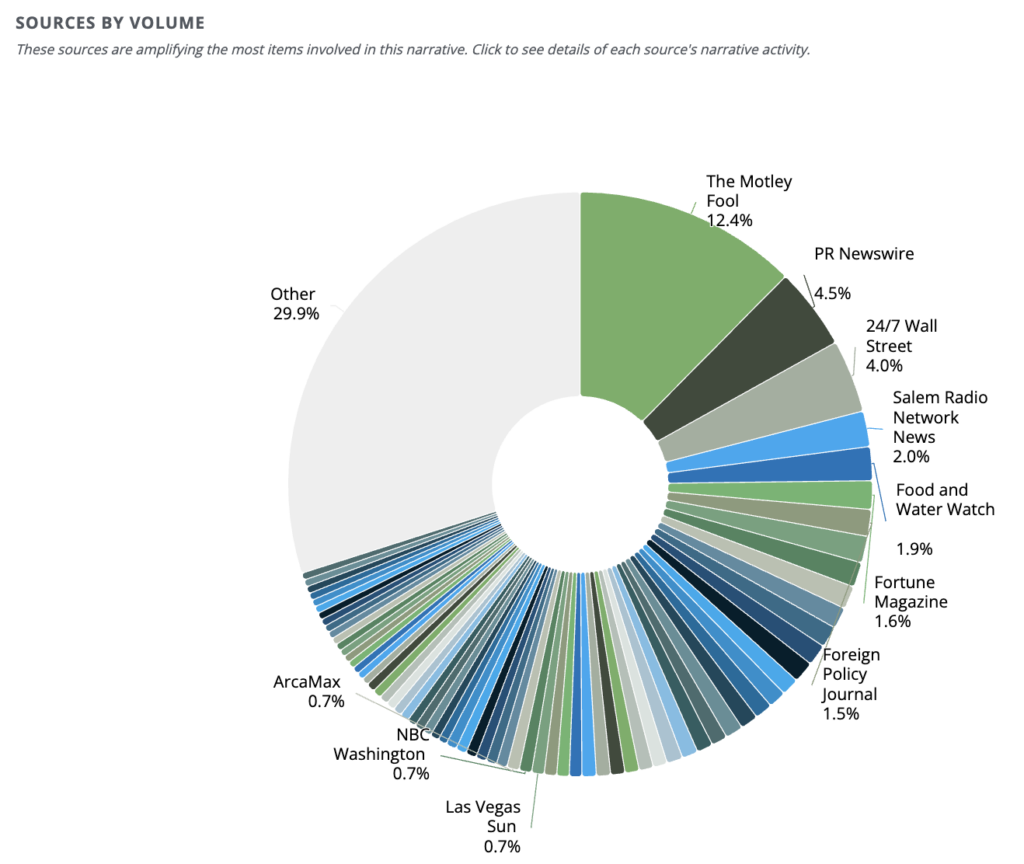
Sources by Volume, June 30 – July 15, 2026. The Motley Fool leads individual outlets at 12.4% of volume, but nearly 30% comes from a long tail of smaller publishers — no single source drives this conversation.
That distribution is exactly what makes the pattern hard to see with conventional media monitoring. There’s no single spike to flag — just a steady accumulation across dozens of channels that adds up to a shared frame long before it reaches a public hearing.
Every proposed AI data center sits inside a complex stakeholder ecosystem. Local residents, environmental organizations, utilities, regulators, investors, technology companies, and policymakers each approach projects from different perspectives. Each also becomes a potential pathway through which narratives gain momentum and eventually influence regulatory outcomes.
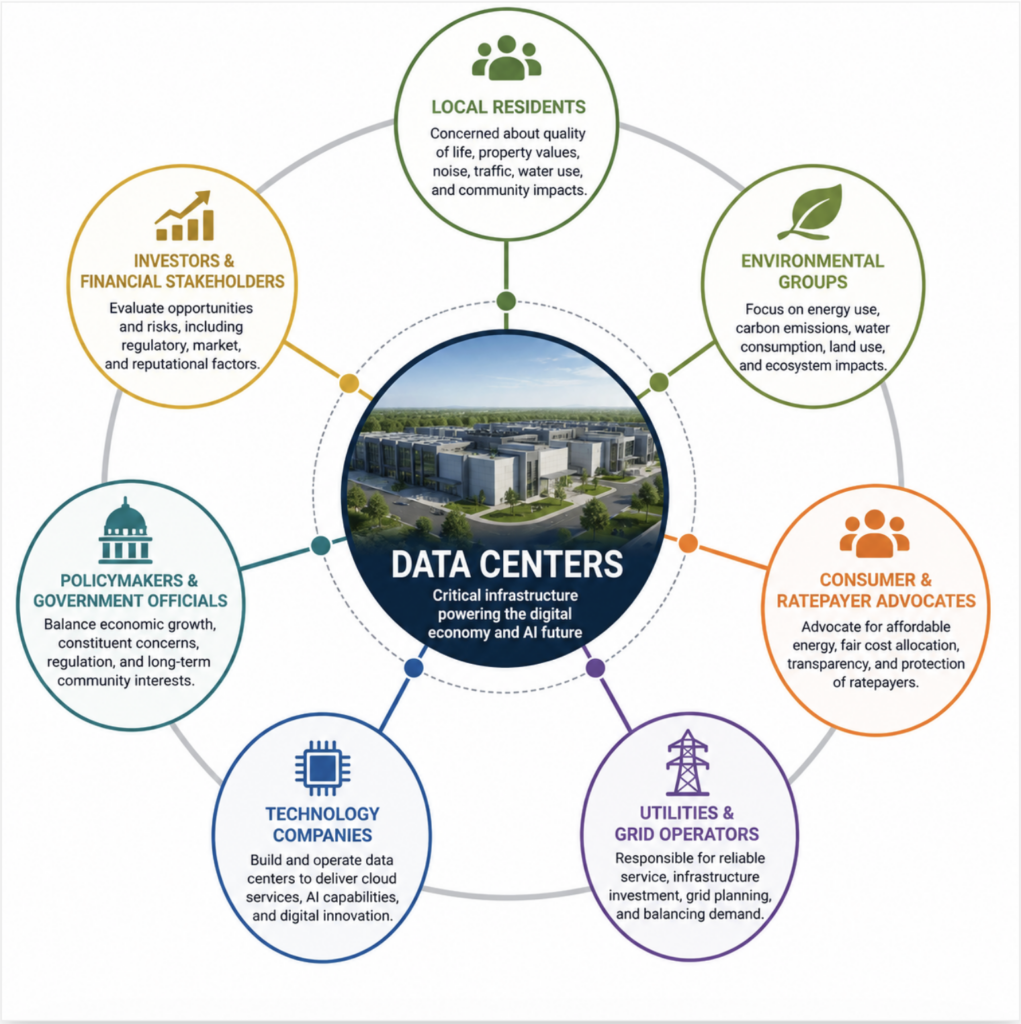
EdgeTheory’s stakeholder map for U.S. AI data center development.
Across the hundreds of communities where AI data center projects are proposed, the specific objections vary by geography and politics, but they consistently draw from the same five narrative frames. Each carries its own emotional signature, and each converts into a distinct kind of regulatory or political risk.
The most persistent narrative argues that utilities are expanding generation and transmission capacity to serve hyperscale customers while shifting the cost onto residential ratepayers. It shows up in headlines about inflation, in utility rate case objections, and in accusations that large technology companies aren’t paying their fair share of grid buildout.
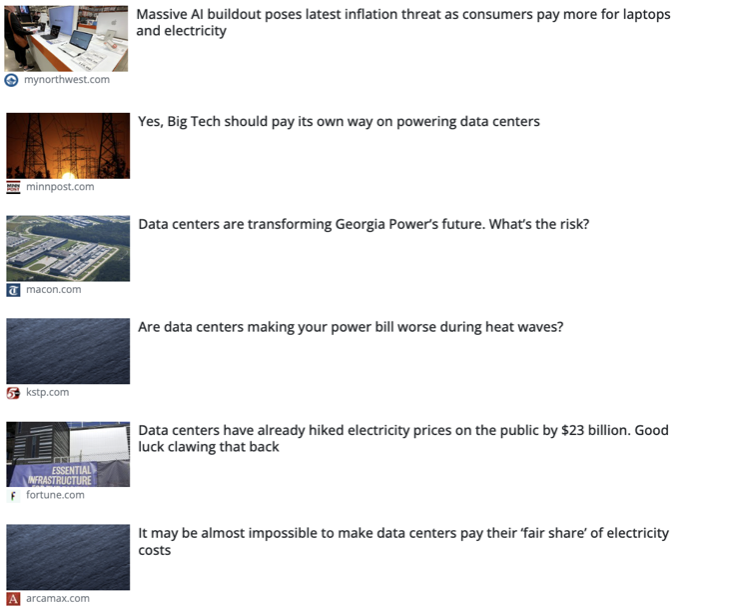
Representative coverage of data center electricity-cost narratives, June–July 2026.
EMOTIONAL PROFILE
Fear and anger dominate. Fear centers on affordability and future utility bills; anger targets utilities, regulators, and technology companies seen as benefiting at the public’s expense.
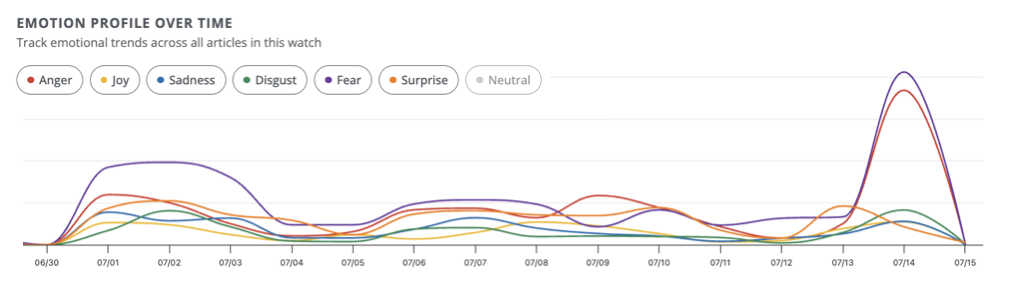
Emotional intensity spiked sharply on July 14, coinciding with New York’s announcement of a temporary halt on new data center construction — a decision several outlets mislabeled as a permanent “ban.”
WHY THIS MATTERS
Electricity-cost narratives tend to surface first and most directly, often within public utility commission proceedings and rate case objections. Organizations that track this narrative early can shape the regulatory conversation before opposition positions harden into formal filings.
Water availability is one of the fastest-growing objections, particularly in regions facing drought or rapid population growth. Critics question whether communities can sustainably absorb the cooling demands of large-scale computing infrastructure on top of existing constraints. In some locales, concerns abound regarding the depletion or poisoning of drinking water.
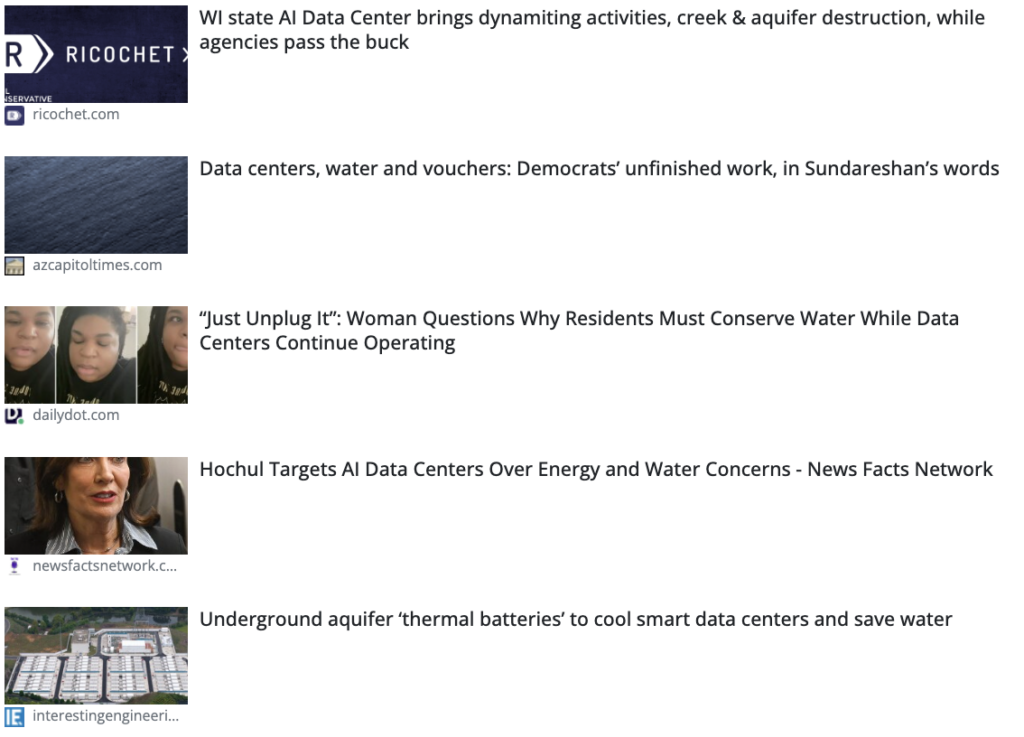
Representative coverage of data center water-use narratives, June–July 2026.
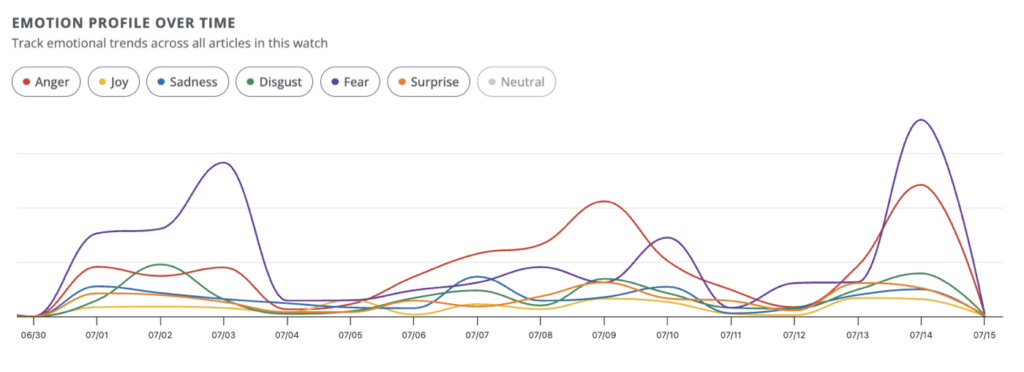
EMOTIONAL PROFILE
Fear again leads, reinforced by anger and, at points, elevated disgust — fear tied to resource scarcity, anger tied to the perception that corporate interests are being placed ahead of the public good.
WHY THIS MATTERS
Water narratives often become focal points during environmental reviews and permitting proceedings, extending approval timelines before construction begins. Organizations that identify these concerns early have greater opportunity to engage stakeholders before opposition becomes entrenched.
This narrative questions whether host communities see any lasting value from projects that occupy large footprints, draw heavily on public incentives, and create relatively few permanent jobs. It frequently overlaps with broader skepticism about the concentration of AI’s economic gains among a small number of technology companies.
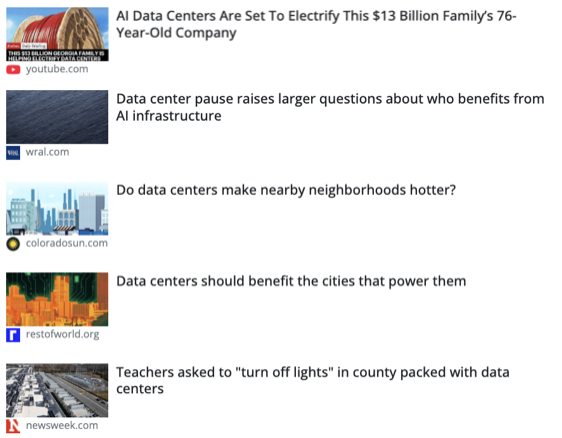
Representative coverage of community-benefit and big-tech-value narratives, June–July 2026.
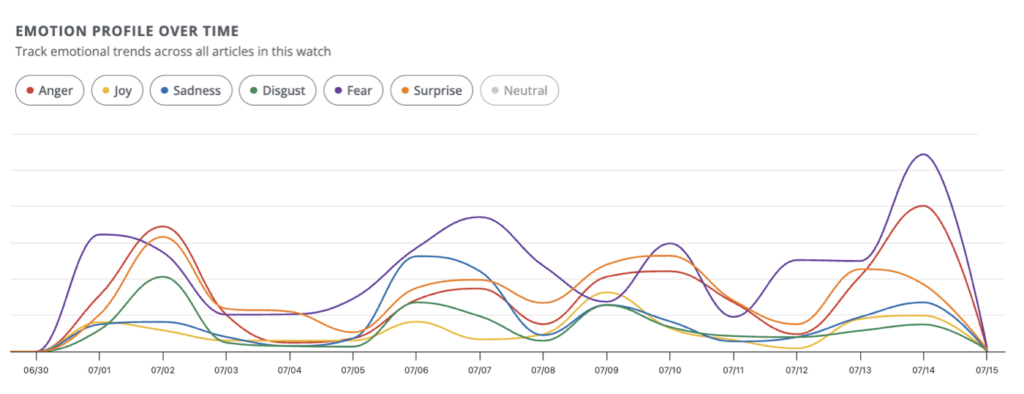
EMOTIONAL PROFILE
Fear, anger, and surprise all register as leading emotions at different points — fear that communities are trading resources for little return, surprise at how few permanent jobs large projects actually create.
WHY THIS MATTERS
This narrative most often erodes local political support and complicates incentive negotiations, even in communities that initially welcomed a project. Recognizing it early gives organizations room to demonstrate tangible community value before local support shifts.
Environmental narratives extend beyond electricity and water to carbon emissions, backup generators, and land use, often tying a specific project to broader climate commitments.
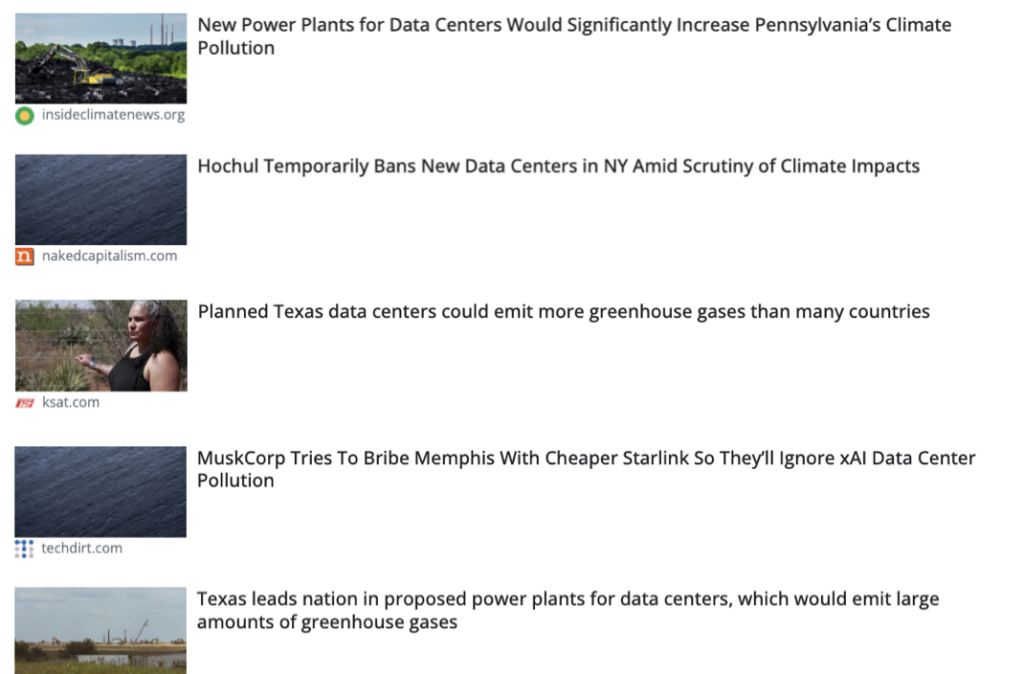
Representative coverage of environmental-impact narratives, June–July 2026.
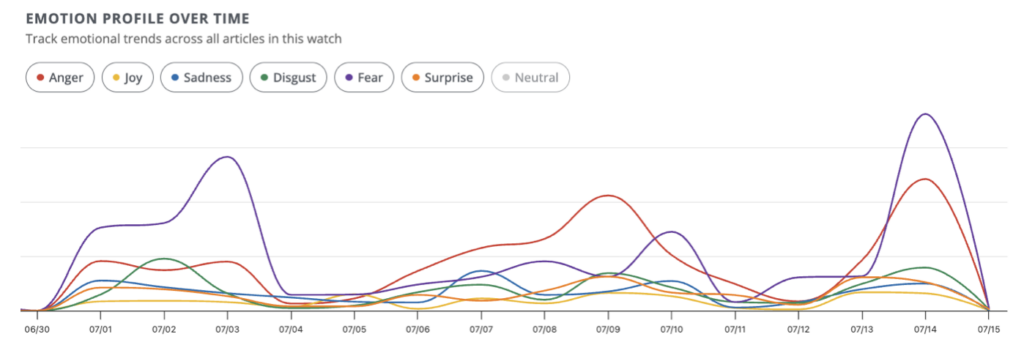
EMOTIONAL PROFILE
Fear and anger dominate throughout — fear centered on long-term resource depletion, anger directed at growth prioritized over stewardship. Unlike the other narratives, environmental objections tend to stay highly localized, tied to a specific facility’s effect on a specific watershed or airshed, even as they connect to the national climate conversation.
WHY THIS MATTERS
Environmental narratives are the most likely to end up in litigation, given their direct overlap with formal environmental review requirements. Organizations that engage on these concerns early are better positioned to avoid legal challenges that can stall a project indefinitely.
Perhaps the most emotionally potent narrative isn’t about data centers at all — it’s about governance. It frames residents as sidelined in decisions made by corporations, utilities, and state agencies, and it can unify otherwise unrelated objections into a single coalition.
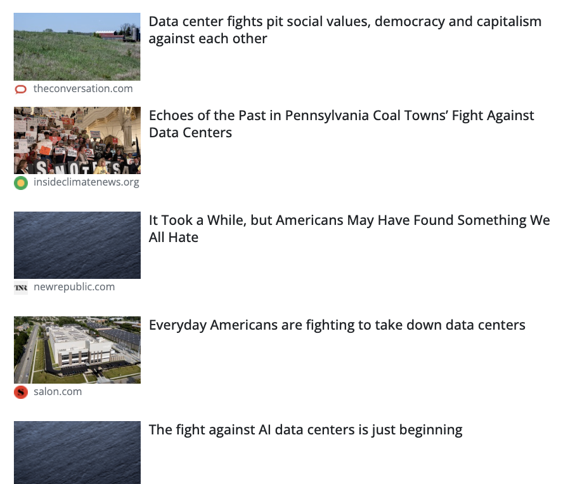
Representative coverage of local-control and governance narratives, June–July 2026.
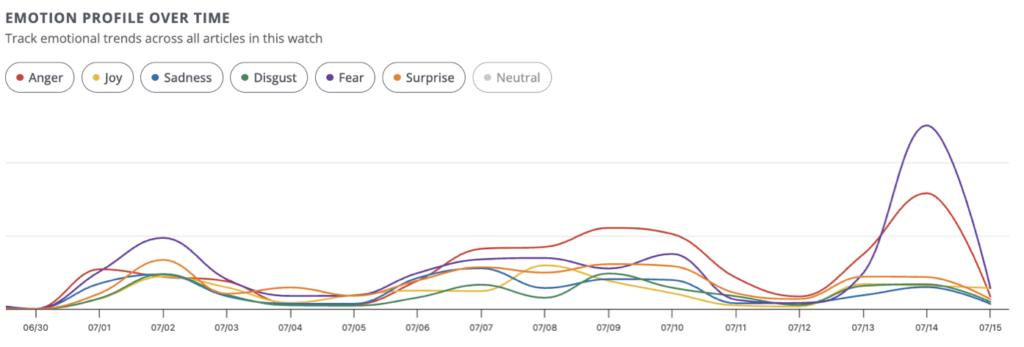
EMOTIONAL PROFILE
Fear and anger consistently dominate — fear tied to being excluded from decisions that affect daily life, anger tied to the perception that business interests hold disproportionate influence over the process.
WHY THIS MATTERS
Governance narratives are the connective tissue — they’re what turns separate objections into one organized opposition movement, and they’re the hardest to resolve with technical or financial concessions alone. Recognizing this shift early is often the difference between managing individual concerns and facing a coordinated coalition.
The pattern is consistent enough to describe as a pipeline. A concern surfaces in media coverage or online discussion. Advocacy organizations and community groups pick it up and translate it into a public campaign. The campaign gains emotional momentum. Local officials respond. Regulatory filings follow. Permitting gets harder. Costs go up.
New York’s move toward a temporary moratorium on new data center construction, and Minnesota’s restriction of public incentives for data center projects, are two of the clearest 2026 examples of this pipeline completing its cycle — both preceded by weeks of the exact narrative buildup described above.
Two to three months typically separate the earliest amplification of an opposition narrative from its appearance as a regulatory filing or a moratorium bill. That lag isn’t a problem. It’s the opportunity — but only for organizations that can see the narrative environment before it becomes a docket entry.
Narrative campaigns tend to get filed mentally under corporate communications — a cost center measured in earned media impressions. That framing under-prices what’s actually at stake. This isn’t shaping brand perception. It’s shaping regulatory outcomes, project timelines, cost of capital, and — in twenty-one of twenty-five canceled projects last year — whether a project gets built at all.
Traditional media monitoring wasn’t built to see this. It answers one question — were we mentioned? — and ranks results by publication reach. It has no way to recognize that a headline in a regional outlet, a filing at a state utility commission, and a talking point at a town hall are downstream expressions of the same narrative, because it was built to count mentions, not trace pipelines.
The result is that leadership at the utilities, hyperscalers, and developers most exposed to this narrative environment are consistently seeing opposition arguments for the first time when they land as regulatory positions. By then, the narrative has already been legitimized.
Within the U.S. sources EdgeTheory tracked over this period, amplification is not concentrated in any single ideological lane.
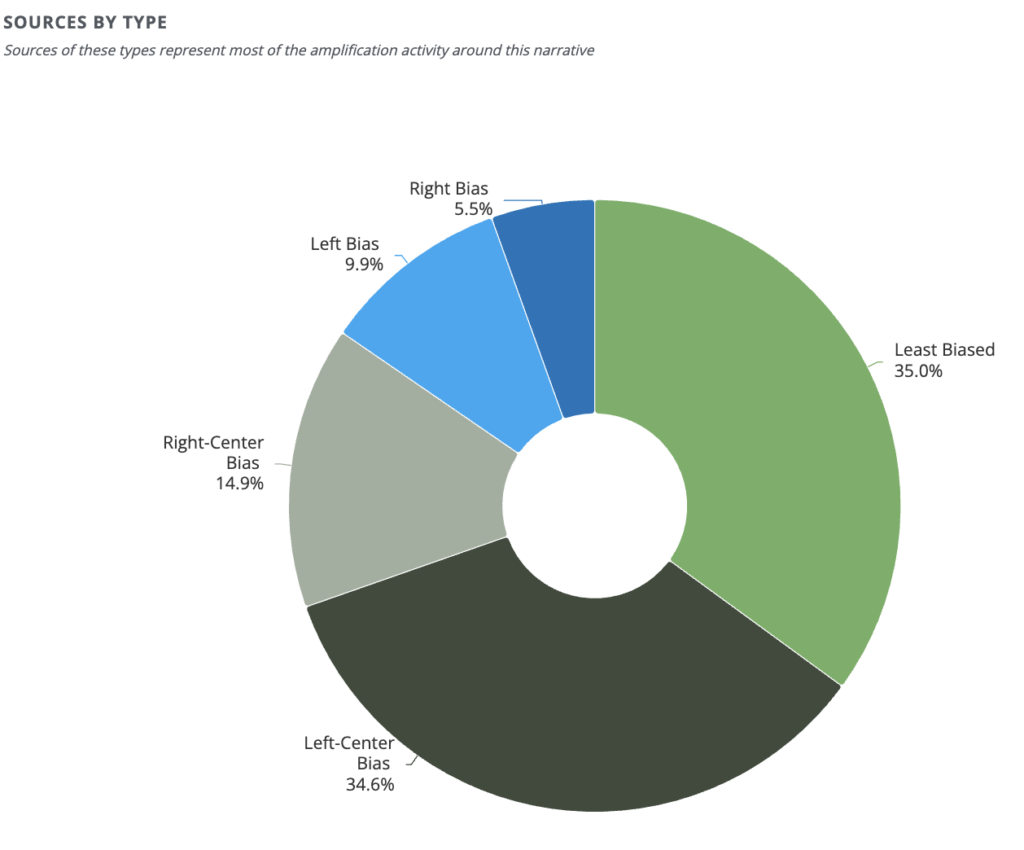
Sources by political lean, June 30 – July 15, 2026.
Thirty-five percent of volume comes from outlets rated least-biased, 34.6% from left-center sources, 14.9% from right-center, and single digits each from the further left and right. That spread matters: this is a genuinely cross-cutting narrative environment, not a fringe phenomenon confined to one part of the political spectrum — which is part of why it converts into regulatory action fairly consistently, regardless of which party controls a given statehouse.
The path from a single article to a permitting decision runs through a consistent set of stages:
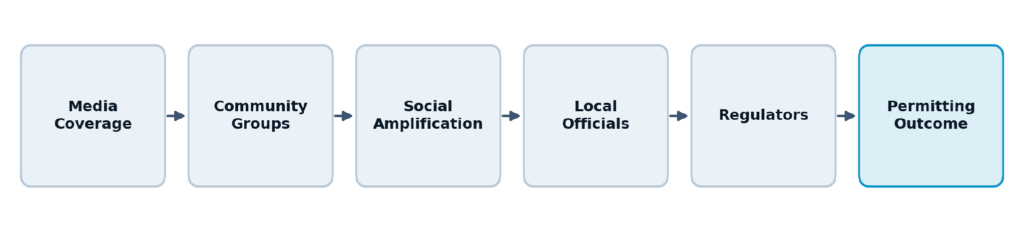
How a narrative typically moves from initial coverage to a permitting outcome.
This analysis draws on narrative items collected by EdgeTheory’s C2 platform between June 30 and July 15, 2026, and is limited to U.S. media, advocacy, and regulatory sources discussing data center development. Emotional profiles reflect EdgeTheory’s Emotional Profile Classifier applied across each narrative cluster. A companion analysis of the global and state-aligned dimensions of this same narrative environment — including how it intersects with strategic competition and election-cycle dynamics — is available separately, referenced below.
EdgeTheory provides Decision-Ready Narrative Intelligence built on AI, tracking the real-time conversations shaping your market through a Detect · Assess · Shape framework that is source-grounded at the foundation, custom-built to your topic, and tracked from emergence to evolution — turning today’s information noise into decision-ready intelligence for brand, reputation, market, and risk decisions, backed by analyst-grade methodology and leadership-ready output.
Read our latest Narrative Intelligence report, Weaponizing the AI Infrastructure Build-Out: Global Cognitive Warfare. Using EdgeTheory’s all-source Narrative Intelligence platform, the report examines how state media, cognitive adversaries, policy institutions, industry publications, independent media, social media, and activist networks are framing and amplifying narratives surrounding AI infrastructure, energy security, environmental concerns, surveillance, and digital sovereignty — and what those narratives mean for U.S. technological competitiveness.

