
Menu
The report analyzes competing narratives across state media, policy institutions, industry sources, independent outlets, social media, and activist networks, covering AI competition, environmental impacts, surveillance, and digital sovereignty.
Using EdgeRunner, an AI powered source discovery agent, the assessment combines Narrative Intelligence (NARINT), Emotional Profile Classification, and network analysis to reveal how governments, corporations, activists, and alternative media shape public perceptions of AI infrastructure.
The US and Iran agreed to a 14-point Memorandum of Understanding (MoU) that is broadly favorable to Iran on 17 June (1). The MoU triggers 60 days of negotiations to reach a final nuclear deal. It requires ending fighting on all fronts (including in Lebanon), ending the US Hormuz Strait blockade (CENTCOM lifted the blockade on 18 June), restoration of commercial traffic “in proportion” to pre-war traffic, and removal of US forces from Iran’s vicinity in 30 days (2). It requires Iran to make its “best efforts” to facilitate toll-free commercial transit through the strait for 60 days, and allows Iran and Oman to “define the future administration” of the Strait. The MoU offers Iran some up-front economic relief, including oil export restriction waivers and unfreezing Iranian assets. The MoU makes additional economic relief, including a $300 billion economic reconstruction plan and removal of US sanctions on Iran, contingent on unspecified nuclear concessions. The MoU does not require specific, immediate nuclear concessions from Iran. It notes that International Atomic Energy Agency-supervised downblending will be the “minimum” acceptable disposal method for Iran’s nuclear stockpile in the final deal, however. Iran “reaffirms” its existing commitment not to procure or develop nuclear weapons in the MoU. This language is a continuation of the regime’s longstanding claim that it does not seek a nuclear weapon.
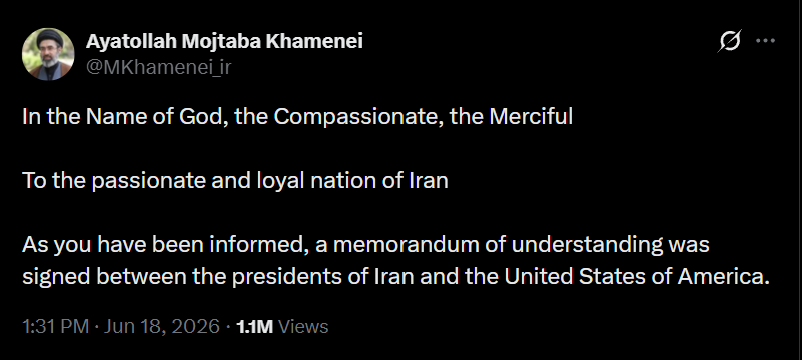
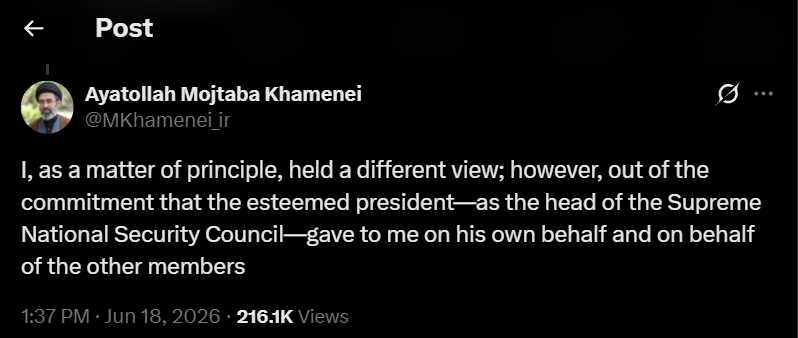
Despite the MoU’s favorability to Iran, Iranian Supreme Leader Mojtaba Khamenei stated he initially opposed the US-Iran MoU, but approved it due to Iranian President Masoud Pezeshkian’s “commitment” not to accede to “excessive” US demands. Khamenei likely stated this to provide himself cover, and make Pezeshkian responsible, if the MoU fails. Hardline IRGC figures including IRGC Commander Ahmad Vahidi are likely playing a leading role in regime decisionmaking and have generally opposed negotiations with the US.
The MoU benefits Iran for several reasons. It offers Iran some immediate economic relief without requiring up-front nuclear concessions. It also sets the stage for Iranian-led administration of the Hormuz Strait in the future. While the MoU language claims Iran and Oman will administer the Strait “in line with” international law, Iranian and Omani treatment of the Strait as territorial, rather than international waters - and especially charging tolls - would violate international law (4). Iranian administration of the Strait would fundamentally alter the Strait’s pre-war status and would strengthen the regime’s ability to threaten global shipping as a pillar of its regional deterrence strategy. We highlighted this risk in our previous article, “How Iran May Attempt to Weather US Attempts to Disarm Its Iraqi Proxies.”

EdgeTheory-surfaced 25 June narrative in which the IRGC announced Iran’s approved routes through the Hormuz Strait are the only authorized routes. The IRGC struck and damaged a Singapore-flagged vessel that reportedly did not adhere to the approved route on 25 June. The MoU does not explicitly forbid Iran from doing this. The regime has framed such attacks as in-line with the MoU, by claiming Iran simply seeks to ensure ships’ adherence to regime-approved safe routes.
The MoU also removes key pieces of US leverage from the equation before talks even begin. Clause 13 requires clauses one, four, five, 10, and 11 to be implemented before negotiations start. These clauses include ending fighting, ending the blockade, removing US troops from the area, Iran making its “best efforts” towards toll-free commercial Hormuz transit for 60-days, the US waiving oil export restrictions, and unfreezing Iranian assets. Key US leverage, like the blockade and US forces’ presence, are therefore removed before substantive nuclear talks unfold. Critically, clause 13 allows Iran to block negotiations if Israel continues operations against Iran’s Lebanese proxy, Hezbollah. Israel is not a signatory to the MoU.
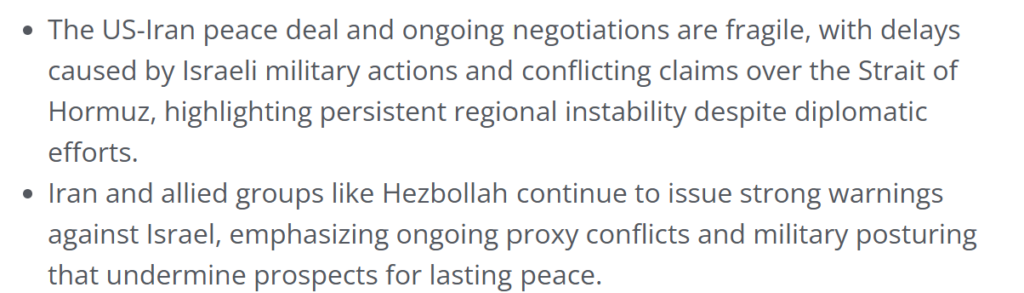
EdgeTheory agentic Narrative Intelligence (NARINT) analysis found that ongoing conflict between Israel and Hezbollah are a significant risk to the MoU. The parties renewed their ceasefire on 19 June, but some strikes have continued.
As Iran benefits from the fragile MoU’s initial effects, and works to shield its proxy in Lebanon, the future of Iran’s Iraqi proxies is beginning to take shape.
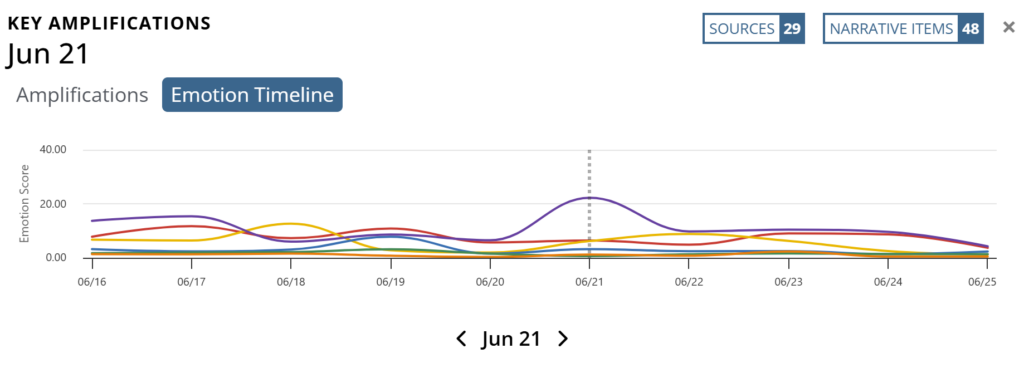
EdgeTheory’s Control of Iran NARINT monitor found that narratives using language evoking “fear” (in purple) spiked drastically on 21 June after President Trump threatened on Truth Social to “hit Iran very hard” if the regime failed to curb Hezbollah’s activities. Narratives evoking “joy” had previously risen moderately relative to other emotive language following the MoU’s signing on 17 June.
We previously assessed that Iran may transform how it leverages its Iraqi proxies by shifting from overt proxy warfare to a quieter, more politically-focused approach. We noted Prime Minister Ali Al-Zaidi’s nascent government and the Coordinating Framework’s apparent efforts to disarm Iraq’s proxies may complement this effort. The Coordinating Framework is Iraq’s largest parliamentary coalition, and primarily includes Shi’a political parties, some of which Iran backs. We also assessed that, if powerful, highly ideological Iran-backed Iraqi militias continued refusing to disarm, they would likely continue advancing Iran’s interests in Iraq as a lethal, extralegal vanguard force.
Initial reporting suggests these assessments are correct: Iran appears to be pursuing a hybrid strategy by integrating key proxies into Iraq’s security institutions, while updating how it leverages its most lethal militias outside of the state’s purview.
Initial reporting suggests these assessments are correct. Iran appears to be pursuing a hybrid strategy by integrating key proxies into Iraq’s security institutions, while updating how it leverages its most lethal militias outside of the state’s purview. Two key Iran-backed militias announced support for disarmament in June. On 2 June, Qais Al-Khazali-led Asa’ib Ahl Al-Haq (AAH) formed a committee to begin “disengaging” from the Popular Mobilization Forces (PMF) and to begin restricting weapons to the state (5). AAH security chief Jawad Al-Talibawi will reportedly lead the committee, which will also include other AAH members (6). The announcement specified AAH’s decision is consistent with the religious authorities (likely referring to Grand Ayatollah Ali Al-Sistani’s) and the Coordinating Framework’s decisions. Al-Sistani is Iraq’s highest Shi’a religious authority, to whom millions of Shi’a Muslims globally refer for guidance. The committee will reportedly inventory personnel, weapons, vehicles, and supplies, and will “organize mechanisms for” communication with the Commander-in-Chief, the Prime Minister (7). Shibl Al-Zaidi-led Kata’ib Al-Imam Ali (KAIA) also formed committees to inventory its forces’ assets and transfer them to the state under the Commander-in-Chief’s supervision on June 2 (8).
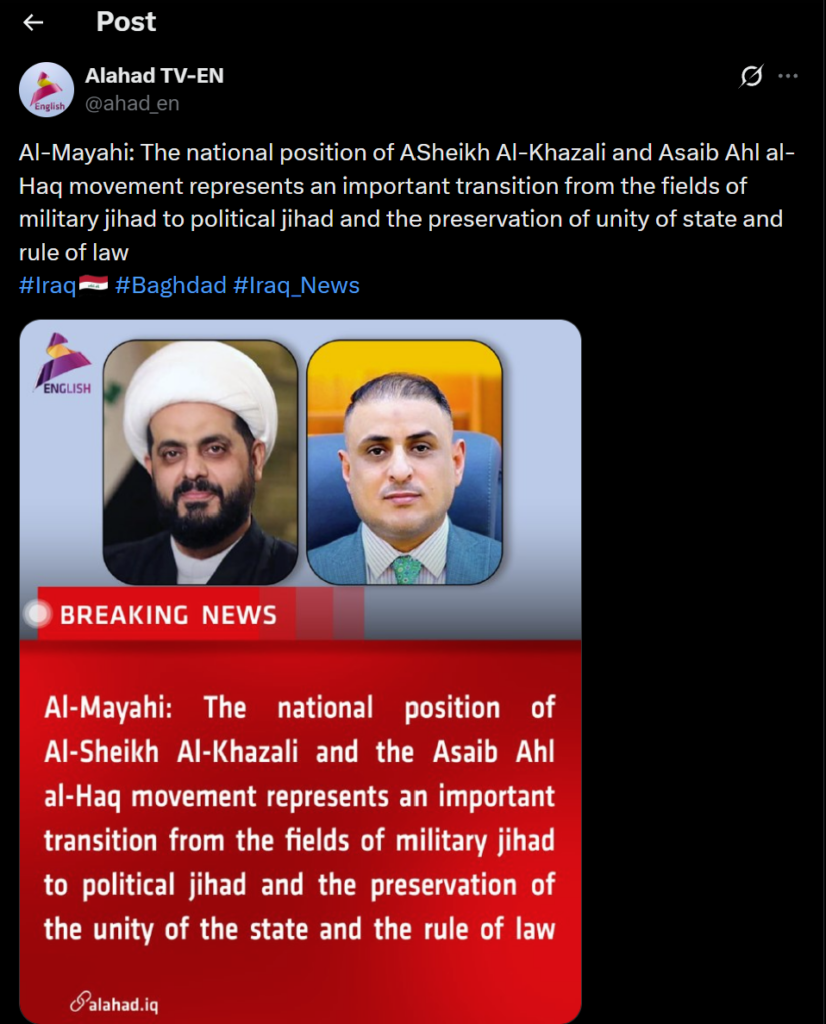
Wasit Al-Ajmal Block leader and former Wasit governor Mohammed Al-Mayahi praised AAH on AAH-owned Al-Ahad TV for AAH’s decision to disarm. Wasit Al-Ajmal and AAH’s Sadiqoun block are both part of the Coordinating Framework.
Al-Khazali and Al-Zaidi are likely choosing to disarm for political gain. Their political gains will allow them to advance Iran’s interests from within Iraq’s political system. AAH’s political wing, Sadiqoun, won almost 30 seats in Iraq’s November elections (9). This would usually enable them to secure key positions, including ministerial posts, in the upcoming government. But the US previously warned the Iraqi government it “would not deal” with a prime minister, minister of foreign affairs, defense, or interior, army chief of staff, counterterrorism service, or intelligence service head affiliated with the armed factions (10). The US also reportedly specified armed faction-linked figures may not hold ministerial posts, even if the factions disarm, in June (11). AAH may nonetheless anticipate that disarmament could allow it to secure sub-cabinet level positions (or posts in future governments) without attracting US scrutiny. AAH is one of Iraq’s most politically integrated Iran-backed militias, so its openness to further entrenchment is not surprising. KAIA’s political wing, the Khadamat Alliance, won five seats in November, and is likely acting on similar political motives (12). Sadiqoun and Khadamat attaining key positions, even sub-cabinet level posts, would benefit Iran because it would install Iran-friendly political actors in critical decisionmaking roles in the new Al-Zaidi government.
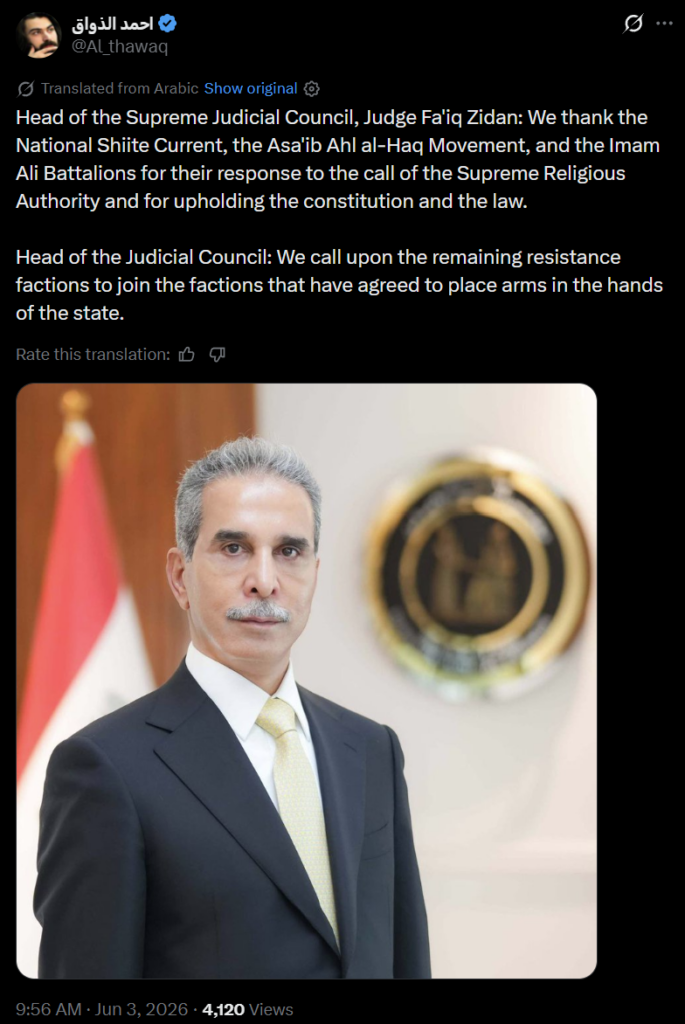
Pro-Axis of Resistance influencer Ahmad Al-Thawaq shared Supreme Judicial Council Head Faiq Zaydan’s statements praising the Shi’a National Movement, AAH, and KAIA for agreeing to disarm and calling on the remaining militias to do so. Zaydan has previously issued rulings favorable to Iran-backed Shi’a political parties and could therefore play an important role in future rulings pertinent to militias that integrate into the state.
Notably, Saraya Al-Salam, an Iraqi militia loyal to Shi’a populist cleric Muqtada Al-Sadr, announced disarmament prior to AAH and KAIA. Al-Sadr leads the Shi’a National Movement (previously known as the Sadrist Movement). He announced Saraya Al-Salam’s “complete separation” from the Shi’a National Movement and its “complete integration” into the state on 27 May (13). Al-Sadr has longstanding complex ties to Iran (Iran funded and trained his militia, Jaysh Al-Mahdi, between 2003 and 2008 to combat US forces in Iraq), but he is not an Iran proxy figure (14). He has often competed with and opposed Iran-backed militias, harboring a particularly strong rivalry with AAH, which was founded after breaking from Jaysh Al-Mahdi around 2005 (15). Al-Sadr has long called for weapons to be restricted in the hands of the state, while simultaneously leveraging Saraya Al-Salam to advance his interests on the ground in eastern Baghdad and central and southern Iraq.
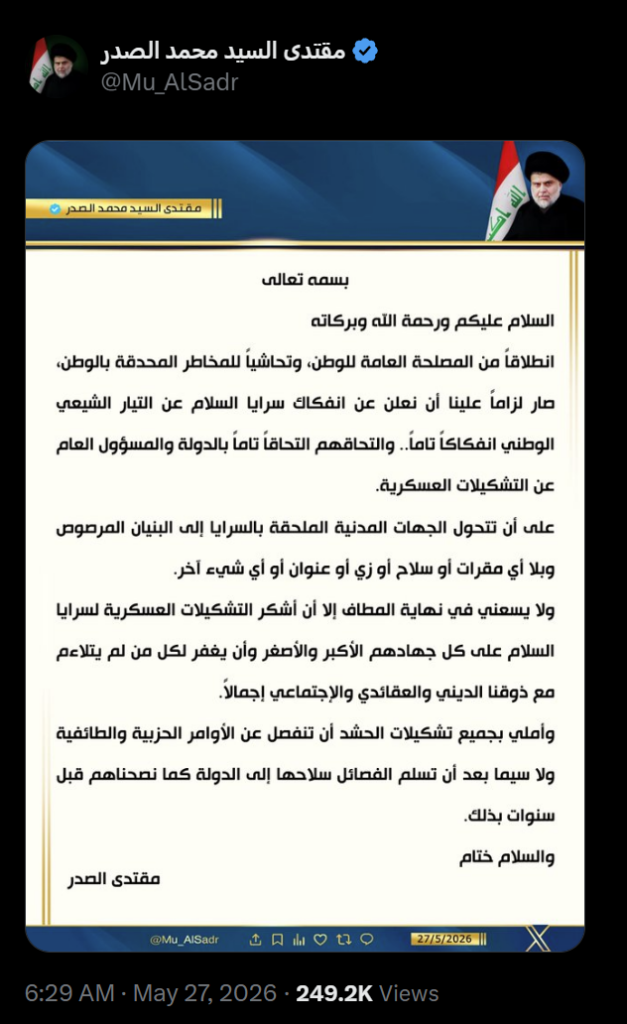
Al-Sadr’s 27 May announcement of Saraya Al-Salam’s “complete separation” from the Shi’a National Movement and its “full integration” into the state. Al-Sadr noted he had “advised” the other militias to transfer their weapons to the state “for years.”
While Saraya Al-Salam is not the primary target of US disarmament efforts, Al-Sadr stands to gain politically from disarmament. The Shi’a National Movement is currently effectively absent from the current government at the executive level because it boycotted the November elections (16). The Movement was also absent from the previous government when, after it won the most seats in Iraq’s 2021 federal elections, the Coordinating Framework blocked it from forming a government (17). The Movement withdrew from Parliament entirely in June 2022 (18). Militia disarmament could allow Al-Sadr a path to secure some positions in the current government. This may already be occurring. Popular Mobilization Commission (PMC) Chairman Falih Al-Fayyadh appointed Saraya Al-Salam leader and PMF Samarra Operations Commander Ali Al-Aqili as an advisor to the PMF’s General Operations Directorate to oversee Saraya Al-Salam’s disarmament and integration on 18 June (19). Fayyadh had previously removed Al-Aqili as Samarra Operations Commander, replacing him with AAH member Yousef Mazban on 14 June, but Prime Minister Al-Zaidi reinstated Al-Aqili shortly thereafter on 18 June (20). Fayyadh may have appointed Al-Zaidi as an advisor to compensate for his previous removal (Saraya Al-Salam has long dominated security in Samarra and around the governorate’s historic Al-Askari Shrine), but the command-level reshuffling and Aqili’s appointment more likely reflect early attempts to divide valuable sub-cabinet level posts among militias who have agreed to disarm.

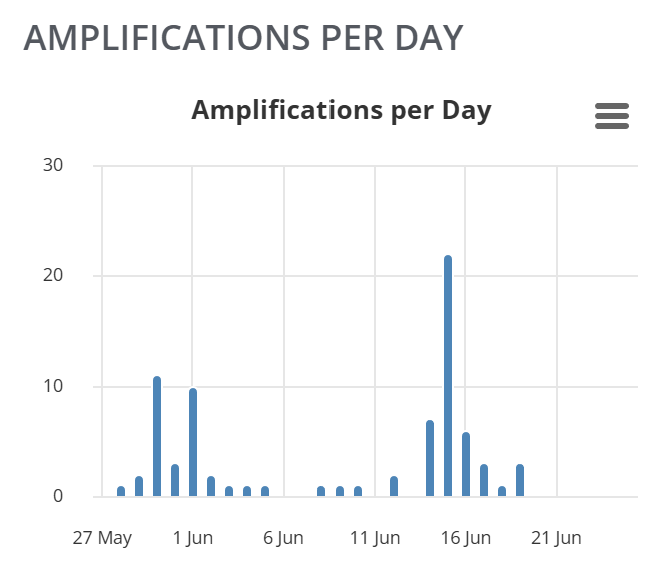
Narrative volume spiked immediately after Al-Sadr’s 27 May announcement (far left) and again rose on 3 June, after AAH and KAIA announced their decisions to disarm.
The Iraqi government is poised to incorporate militia personnel into established Iraqi security institutions, potentially exposing those institutions to Iranian infiltration. Our previous assessment noted that phase two of Islamic Revolutionary Guard Corps-Quds Force (IRGC-QF) commander Esmail Qaani’s potential “quiet” strategy entails “merging” the PMF into “official security institutions.” Most Iran-backed militias have official brigades in the PMF, which formally answer to the Prime Minister but in reality answer to Iran. AAH controls the 41st, 42nd, and 43rd brigades and KAIA controls the 40th brigade (21). On 3 June, Prime Minister Al-Zaidi presented his disarmament committee’s proposal to allocate 35,000 jobs in security and military institutions, including the Counterterrorism Service (CTS), to disarmed militia personnel. He specified 15,000 of these would go to former Saraya Al-Salam members.
The Iraqi government is poised to incorporate militia personnel into established Iraqi security institutions, potentially exposing those institutions to Iranian infiltration.
Al-Zaidi gave the factions three months to disarm and warned that those who do not meet the deadline will be prosecuted (22). Integrating militia members into longstanding, independent security institutions like the CTS could allow Iran to transform those forces' disposition from within via an influx of “new” recruits. As highlighted in our previous assessment, Badr Organization leader Hadi Al-Ameri has long overseen the infiltration of Iraq’s Interior Ministry, and specifically the Federal Police, using this model. Al-Ameri is a leader on the disarmament committee, and is therefore perfectly positioned to ensure the current militia’ “disarmament” follows the Federal Police model. In essence, the Iraqi government’s integration scheme could effectuate Qaani’s “phase two” plan and entrench Iranian influence in formerly independent institutions.
Iraq’s most hard-line Iran-backed militias have continued resisting disarmament. Iran’s most loyal and ideologically aligned militias reaffirmed their opposition to disarmament in June. Harakat Hezbollah Al-Nujaba (HHN) reiterated on 3 June that the Islamic Resistance in Iraq, an umbrella group of Iran’s most lethal Iraqi militias, refuses to disarm (23). A Kata’ib Sayyid Al-Shuhada (KSS) spokesperson similarly stated KSS will not disarm as long as foreign troops remain in Iraq and will not participate in the government’s disarmament initiative (24). Kata’ib Hezbollah (KH) security official Abu Mujahid Al-Assaf criticized factions who chose to disarm on 4 June, stating they “were not involved in the ranks of the Islamic Resistance” and have not “targeted the American enemy, even with a single stone,” for a long time” (25). Al-Assaf stated the Islamic Resistance will “remain cohesive” and will continue operations until foreign occupation (likely referring to US forces’ presence) ends. He emphasized the Islamic Resistance will not surrender “even a single bullet” except to the Imam Al-Mahdi, the 12th and final Imam Shi’a Muslims believe will reappear at the end of time (26). Iraqi media reported on 2 June that some Coordinating Framework elements, likely including these militias’ political wings, threatened to leave the Framework or boycott the political process if disarmament proceeds (27).
The US has broadened its strategy for preventing militias’ influence in the nascent government, including by heightening pressure on the Al-Zaidi administration to dismantle Iran-backed militias’ financial networks.
Initial reporting suggests Iran could reorganize and centralize control over its hard-line militias. As discussed in our previous assessment, Qaani visited Iraq on 18 April and reportedly reiterated a plan for militia disarmament and integration into the Iraqi state during the visit (28). “IRGC-linked figures” then reportedly warned certain unspecified militias to resist disarmament in May (29). Reuters later reported the IRGC used new, secretive militia cells to conduct multiple drone attacks targeting Kuwait, Saudi Arabia, and the United Arab Emirates between 20 April and 17 May. Reuters states these cells report directly to the IRGC, instead of to individual militia leaders (30). On the surface, these events may appear contradictory. But they are more likely simply illustrative of Iran’s emerging hybrid strategy. Qaani likely instructed militias who are already politically entrenched to fully integrate, tasked IRGC personnel to instruct HHN, KSS, and KH to retain their weapons, then developed new cells under direct IRGC control using personnel from these militias. The April-May drone strikes could foreshadow how Iran plans to leverage these cells for future precision use. It is highly unlikely that HHN, KSS, and KH would vocally oppose disarmament - and would continue promoting the Islamic Resistance in Iraq’s “cohesion” - without Iranian approval. These cells could provide a window into what the Islamic Resistance in Iraq’s (and HHN’s, KSS’, and KH’s) futures look like.
Parliament has not confirmed additional cabinet ministers since 14 May. 9 cabinet posts, including Minister of Defense and Minister of the Interior, remain unfilled. However, Prime Minister Al-Zaidi made several other appointments in June. He named Qassem Al-Aboudi National Security Advisor, replacing Badr Organization member Qassem Al-Araji (31). Iraqi Kurdish media describes Al-Aboudi as a relatively unknown figure (32). Notably, Al-Aboudi claimed the US Embassy sought to “incite” Iraqi militias to prolong US presence in the country in a 2023 interview with Houthi-owned Al-Masirah TV (33). This rhetoric suggests he is sympathetic to the militias. Al-Zaidi will reportedly retain Al-Araji as a “special security adviser” (34). Al-Zaidi also replaced Iraqi National Security Service head Abdul Karim Al-Basri with Basim Al-Badri. Al-Badri is affiliated with the Dawa Party, led by former Prime Minister Nouri Al-Maliki and previously led the Accountability and Justice Commission (35). Iran-friendly actors, including Al-Maliki, have historically used the commission to target their political enemies. Al-Zaidi replaced Central Bank of Iraq governor Ali Al-Alaq with Nizar Nasser (36). Nasser reportedly previously led the CBI’s Anti-Money Laundering and Counterterrorism Financing Office. Al-Zaidi also replaced National Investment Commission head Haider Makkiyya with Adel Al-Yasiri (37).
Meanwhile, the US has broadened its strategy for preventing militias’ influence in the nascent government, including by heightening pressure on the Al-Zaidi administration to dismantle Iran-backed militias’ financial networks. US Presidential Envoy for Iraq Tom Barrack met with Al-Zaidi on 15 June. Barrack reportedly conveyed several US conditions for supporting Al-Zaidi’s government, including disarming the militias, cutting off their funding sources, dismantling their financial networks, and “removing” their leaders (38). The US State Department announcement following the meeting underscored US support for “Iraqi plans for ensuring the complete disarmament and disbandment of all armed groups” operating outside of the state (39). Al-Zaidi released a similar statement (40).
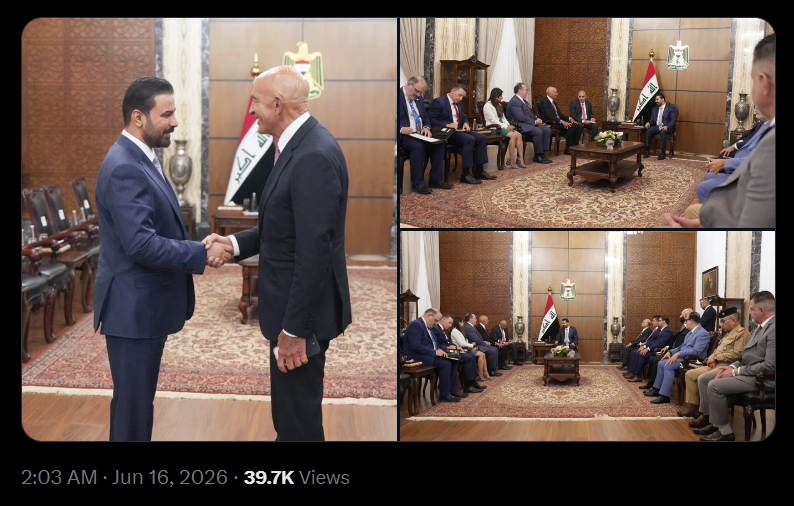
Left: Narrative volume in Iraqi media discussing Barrack in June, from EdgeTheory C2. The first spike reflects President Trump’s appointment of Barrack as Special Envoy to Syria and Iraq on 31 May. The second spike reflects Barrack’s visit to Iraq on 16 June. Right: Official images of Barrack and Al-Zaidi’s meeting from the Office of the Prime Minister X account.
Iran has secured a fragile but broadly favorable MoU that provides immediate economic relief, recognizes increased Iranian influence over the Hormuz Strait, and allows Hezbollah a respite from Israeli attacks.
Regional media claimed the US sent two shipments of Iraqi oil revenue to coincide with Barrack’s visit and made accessing the revenue contingent on Iraq meeting the US’ demands. The US previously halted revenue shipments in April (41). The US Federal Reserve has managed Iraqi oil revenue since 2003 (42). On 19 June the Financial Action Task Force (FATF), an international body that sets the standards for anti-money laundering and countering terrorism financing, announced Iraq is working with the organization as a “jurisdiction under increased monitoring to combat such practices (43). Barrack’s conditions, the conditional oil revenue, and the US’ likely role in prompting Iraq’s FATF cooperation suggest the US is going beyond simply prohibiting the militias from holding government posts, and targeting their income directly. The US is likely to evaluate Iraq’s progress towards its conditions when Al-Zaidi meets with President Trump in July. In doing so, the US must remember that Iran’s potential hybrid approach could allow Iran-backed militias to use the Iraqi government itself as a source of income, by placing militia-friendly politicians in sub-cabinet level posts, and by allowing “integrated” militias to benefit from Iraq’s defense budget.
Iran has secured a fragile but broadly favorable MoU that provides immediate economic relief, recognizes increased Iranian influence over the Hormuz Strait, and allows Hezbollah a respite from Israeli attacks. In Iraq, US pressure has limited Iran’s options regarding how it can leverage its proxies, but Iran appears to be adapting by implementing a hybrid strategy that will allow it to shield its proxies under the state umbrella while honing its most lethal militias.
Whether this strategy is superficial or substantive remains to be seen and will depend on how the Iraqi government enforces disarmament. Militias like AAH and KAIA that agree to disarm may attempt to maintain some extralegal forces while allowing most personnel to integrate into the state. Even if all AAH and KAIA fighters integrate into the state, the US should remember that disarmament that does not dismantle existing units and enforce allegiance to the Prime Minister (rather than to militia leaders or Iran) will be disarmament in name only.
References
https://www.npr.org/2026/06/18/nx-s1-5863027/us-iran-trump-memorandum-of-understanding-full-text
https://x.com/CENTCOM/status/2067660042736734352
https://www.npr.org/2026/06/18/nx-s1-5863027/us-iran-trump-memorandum-of-understanding-full-text
https://www.lawfaremedia.org/article/the-strait-of-hormuz-and-the-limits-of-maritime-law
https://ahlualhaq.iq/index.php?page=details&id=7682&lang=en
https://www.washingtoninstitute.org/policy-analysis/kataib-hezbollah-publicly-mocks-asaib-ahl-al-haq-cowardice and https://www.instagram.com/p/DZE_hwgtOYE/
https://alsadiqon.iq/wp-content/uploads/2025/11/1-%D9%84%D9%85%D9%88%D9%82%D8%B9-%D8%A7%D9%84%D8%AD%D8%B1%D9%83%D8%A9.jpg Most sources claim Sadiqoun won 27 seats. Sadiqoun’s website claims they won 28.
https://almadapaper.net/437645/
https://www.shafaq.com/en/Iraq/IHEC-publishes-final-results-of-Iraq-s-2025-parliamentary-elections
https://x.com/Mu_AlSadr/status/2059582674428170728
https://ctc.westpoint.edu/the-future-of-moqtada-al-sadrs-new-jaysh-al-mahdi/ and https://www.tandfonline.com/doi/full/10.1080/23311886.2025.2606371
https://www.washingtoninstitute.org/policy-analysis/profile-asaib-ahl-al-haq-0
https://thearabweekly.com/sadr-confirms-boycott-casting-shadow-over-iraqs-november-elections
https://www.aljazeera.com/news/2022/6/15/sadrists-quit-iraqs-parliament-but-al-sadr-isnt-going-away
https://insightiraq.com/articles/pmf-reinstates-sadr-aligned-head-of-samarra-operations-in-u-turn/
https://rudaw.net/english/categories/iraq/958915
https://rudaw.net/english/categories/iraq/958915
https://al-islam.org/shiite-encyclopedia/special-specifications-imam-al-mahdi
https://almadapaper.net/434016/
https://shafaq.com/ar/ سیاسة/تعيين-قاسم-الاعرجي-مستشارا-امنيا-لر-يس-الوزرا
https://thenewregion.com/posts/5683
https://english.masirahtv.net/post/33569/
https://shafaq.com/en/Iraq/Iraqi-PM-names-Qasim-Al-Araji-Special-Security-Adviser
https://www.aei.org/op-eds/trump-will-likely-oppose-basim-al-badri-as-iraqi-prime-minister/ and https://www.reuters.com/world/middle-east/iraq-shiite-alliance-names-bassem-al-badry-pm-nominee-2026-04-20/
https://www.iraq-businessnews.com/2026/06/23/new-governor-takes-charge-at-iraqs-central-bank/ and https://shafaq.com/en/Iraq/Iraqi-PM-appoints-new-central-bank-governor-investment-chief
https://shafaq.com/en/Iraq/Iraqi-PM-appoints-new-central-bank-governor-investment-chief
https://almadapaper.net/439458/
https://x.com/IraqiPMO/status/2066767106947928421
https://www.aljazeera.com/news/2026/4/22/us-halts-iraq-dollar-shipments-in-pressure-campaign-over-iran-linked-groups and https://www.alaraby.co.uk/economy/%D8%AE%D8%A7%D8%B5-%D9%88%D8%B5%D9%88%D9%84-%D8%AF%D9%81%D8%B9%D8%AA%D9%8A%D9%86-%D9%85%D9%86-%D8%A7%D9%84%D8%AF%D9%88%D9%84%D8%A7%D8%B1-%D9%86%D9%82%D8%AF%D8%A7%D9%8B-%D8%A5%D9%84%D9%89-%D8%A8%D8%BA%D8%AF%D8%A7%D8%AF-%D8%AA%D8%B2%D8%A7%D9%85%D9%86%D8%A7-%D9%85%D8%B9-%D8%B2%D9%8A%D8%A7%D8%B1%D8%A9-%D8%AA%D9%88%D9%85-%D8%A8%D8%B1%D8%A7%D9%83
https://www.reuters.com/business/energy/how-us-controls-iraqs-oil-revenues-2026-01-23/

