The issues shaping your industry don't always begin in the headlines. Regulatory debates, stakeholder concerns, and competing narratives often develop across policy organizations, advocacy groups, industry forums, and digital communities before attracting mainstream attention.
For associations, keeping up with these conversations is part of the job. But understanding where they're coming from, why they're gaining attention, and what they might mean for members is considerably harder.
EdgeTheory brings Narrative Intelligence to that challenge. By examining the sources and conversations shaping an issue, associations can see how competing narratives develop, who's influencing them, and which ones are gaining momentum.
It's a different way to understand the environment in which policy decisions are made, industry reputations are formed, and advocacy efforts succeed or struggle.
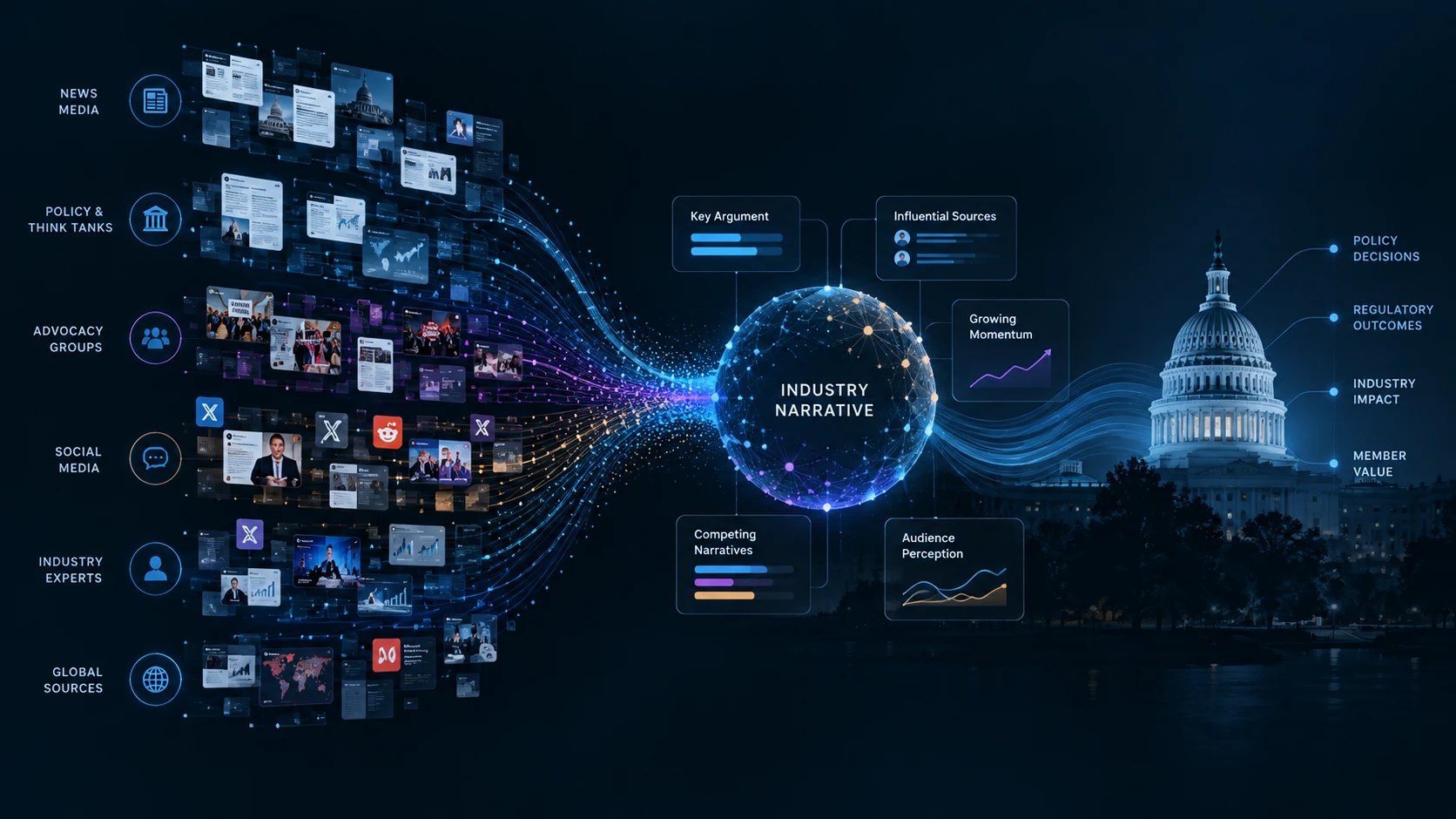
Most associations already have ways to follow the issues that matter to them. Their teams track legislation, review policy developments, monitor media coverage, and stay in touch with industry stakeholders.
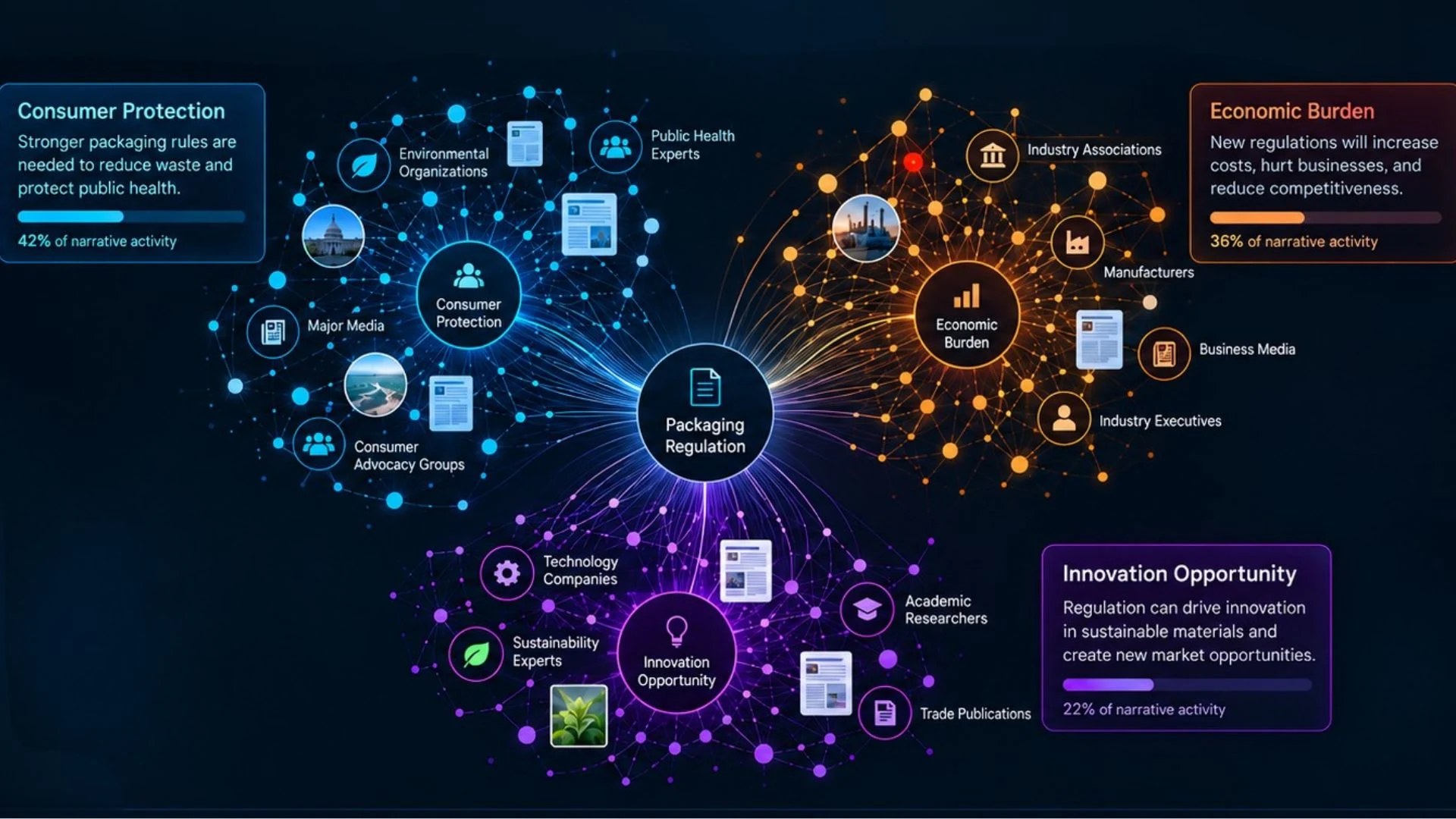
An industry group may see it as an unnecessary burden, while consumer advocates frame it as an important protection. Policy experts introduce their own interpretations, and conversations begin to spread through professional communities and online forums.
By the time the issue reaches a broader audience, several competing narratives may already be influencing the debate.
Traditional monitoring can show what each group is saying. What it doesn't always reveal is how those arguments are connected, which voices are having the greatest influence, or whether the conversation is moving in a new direction.
That's where Narrative Intelligence adds a different perspective. EdgeTheory connects individual discussions to the larger narratives taking shape around an issue, giving associations a more complete understanding of the environment they're working in.
Associations have to keep an eye on developments that could affect an entire industry or profession. Sometimes those developments are obvious. Others begin as relatively small conversations that gradually attract attention from advocacy organizations, policymakers, journalists, or the public.
EdgeTheory helps issues management teams identify emerging narratives and follow how they change over time. It also provides insight into the organizations and individuals contributing to those conversations, making it easier to distinguish a passing controversy from an issue that deserves closer attention.
That matters whether the concern involves industry practices, regulatory proposals, misinformation, or changing public expectations. With a clearer picture of what's developing, associations can evaluate the implications for their members and decide where to focus their attention.
Following legislation is essential to government relations work, but the status of a bill rarely tells the whole story.
Policy decisions take shape in an environment of competing interests, arguments, and public perceptions. A proposed regulation might be described as necessary consumer protection by one organization and an economic burden by another. Industry leaders, advocacy groups, and policy experts may all be discussing the same proposal, but from very different perspectives.
EdgeTheory helps associations understand those competing narratives and the sources advancing them. As the debate evolves, teams can follow which arguments are gaining attention, how the conversation is changing, and where new perspectives are emerging.
Legislative tracking remains an important part of the process. Narrative Intelligence adds context about the conversations surrounding legislation and regulation, helping government relations teams better understand the environment in which decisions are being considered.
Successful advocacy depends on understanding the people and organizations you're trying to influence, along with the arguments they're already hearing.
That can be difficult when a policy issue is being discussed across multiple communities, each with its own priorities and interpretation of what's at stake.
With EdgeTheory, associations can examine the narratives surrounding their advocacy priorities, identify influential voices, and understand how different perspectives are developing. They can also see where competing arguments are gaining traction and where their own industry's position may need greater explanation.
These insights give advocacy and communications teams a stronger foundation for deciding what to emphasize, which stakeholders to engage, and how to communicate their position in a way that addresses the conversation already taking place.
Members expect their associations to keep them informed. Increasingly, that means helping them interpret developments, not simply passing along the latest articles or legislative updates.
A business owner may want to understand why a particular regulatory proposal is attracting attention. A professional member may be concerned about changing public attitudes toward their field. Industry executives may need to know whether an emerging issue could affect their organizations.
Narrative Intelligence gives associations another way to answer those questions. By examining the conversations surrounding an industry, associations can provide members with timely insight into the issues, arguments, and perceptions that may affect them.
That kind of intelligence helps make the association a more valuable resource, particularly when members are trying to make sense of complex or rapidly changing developments.
One of the strongest opportunities for associations is to turn the intelligence they gather for their own work into something useful for their members.
The same understanding that informs an advocacy strategy can help an executive prepare for a board discussion, give members context around a developing policy issue, or support an association's thought leadership.
EdgeTheory can support several of these responsibilities.
Become more useful when they explain how an issue is developing and why certain arguments are gaining attention, rather than simply summarizing recent coverage.
Benefit from a clearer understanding of the sources, stakeholders, and competing narratives surrounding important industry decisions.
Can draw on evidence about how an industry is being discussed, helping associations contribute informed perspectives to debates that matter to their members.
Connecting related conversations can reduce the effort involved in sorting through disconnected articles, posts, and commentary.
The larger opportunity is to become more than a source of industry news. It's to become a trusted source of industry intelligence that members can use in their own decision-making.
Most monitoring tools start with a search. You enter a topic or a set of keywords, and the system returns the content that matches.
That approach is useful, but it has limitations.
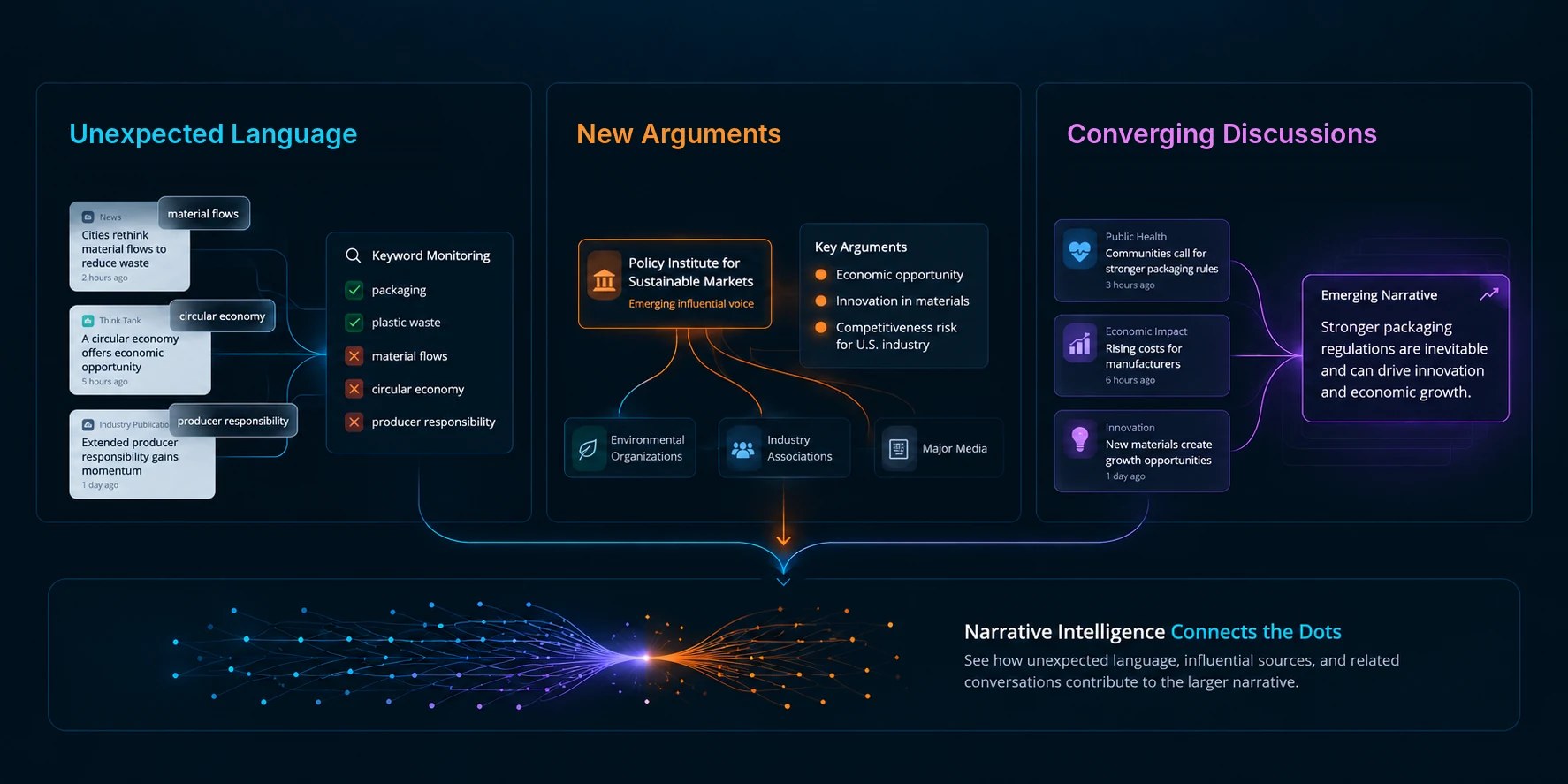
Rather than relying on keywords alone, the platform examines the organizations, individuals, and information sources involved in shaping conversations. It looks at how narratives form, how different sources contribute to them, and how those narratives change over time.
The intelligence can be configured around the issues, stakeholders, organizations, and sources most relevant to an association's industry. This makes it possible to follow the conversations that matter without treating every article or social media post as an isolated piece of information.
For an association tracking a contentious policy issue, that might mean understanding where a particular argument originated, which organizations are reinforcing it, and whether alternative interpretations are beginning to gain attention.
The result is a clearer picture of what's happening around an issue and the people and organizations influencing how it is understood.
EdgeTheory organizes Narrative Intelligence around a straightforward approach: Detect · Assess · Shape.
The first step is recognizing the narratives developing around an association's issues and priorities. EdgeTheory examines relevant sources across media, policy organizations, industry groups, and digital communities to identify emerging conversations and follow established ones as they evolve.
Not every conversation deserves the same attention. EdgeTheory helps teams understand the sources behind a narrative, how it is spreading, and whether it is gaining or losing momentum. Associations can then consider what those developments might mean for their policy priorities, reputation, and members.
Once an association understands the narrative environment, it is better positioned to respond. That intelligence can inform advocacy strategy, leadership briefings, stakeholder engagement, and communications developed around the issues influencing its industry.
EdgeTheory brings this intelligence to your team through two capabilities:
Focused narrative briefings.
Deeper exploration and analysis of the sources and narratives shaping your industry.
Media monitoring and social listening are useful for following coverage, mentions, and online conversations. Narrative Intelligence looks at how those individual pieces of information connect. It examines the larger narratives they contribute to, the sources influencing them, and how those narratives develop over time.
For associations, that provides context that can be difficult to get from monitoring results alone.
No. Legislative tracking helps associations follow bills, regulatory proposals, and policy developments. EdgeTheory complements those tools by examining the conversations surrounding the issues under consideration.
For example, a government relations team can follow a bill's progress through its existing system while using Narrative Intelligence to understand how different stakeholders are framing the debate.
Associations can use Narrative Intelligence to provide members with more meaningful context around emerging issues, policy debates, and changes in industry perceptions.
That insight can support member briefings, executive discussions, thought leadership, and other communications that help members understand developments affecting their organizations or professions.
Associations are expected to represent their members, influence policy discussions, and provide leadership on the issues affecting their industries. Doing that well requires a clear understanding of the conversations taking place beyond their own organizations.
EdgeTheory gives associations a way to examine those conversations in greater depth, understand the narratives influencing them, and bring that intelligence into their advocacy, public affairs, and member communications.
See what Narrative Intelligence can reveal about the issues that matter to your association.


