
Menu
Menu
The rapid growth of artificial intelligence has fueled one of the largest technology investment cycles in recent history, raising questions about whether current valuations reflect sustainable growth or a speculative financial bubble. Concerns over an AI market correction are increasingly discussed by financial media, investors, policymakers, and adversarial networks. EdgeTheory detects increasing market analyses that highlight growing uncertainty surrounding AI-related valuations, capital expenditures, and enterprise adoption. As AI becomes more central to U.S. technological competitiveness and financial markets, accurately assessing these risks is
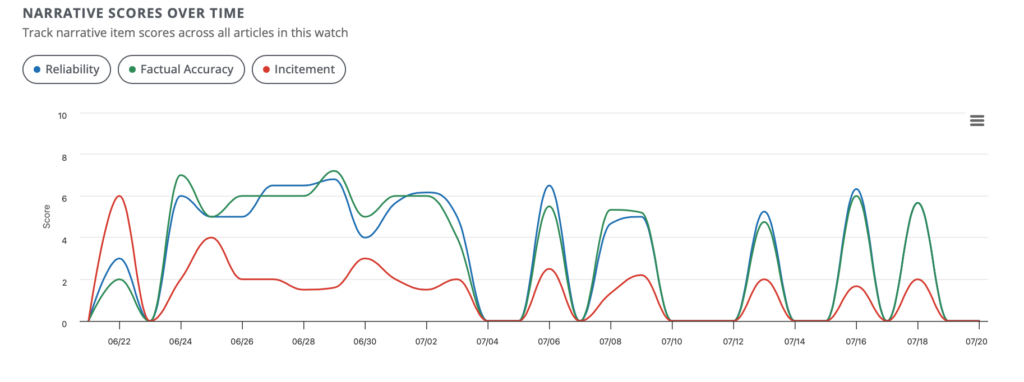
Reliability and factual accuracy scores remained consistently high across AI bubble reporting
High reliability and factual accuracy scores indicate that many narratives are supported by credible reporting and legitimate market concerns. Periodic increases in incitement coincided with discussions of AI-related debt, valuations, and potential market corrections, illustrating how evidence-based risks can be amplified into more extreme AI collapse narratives.
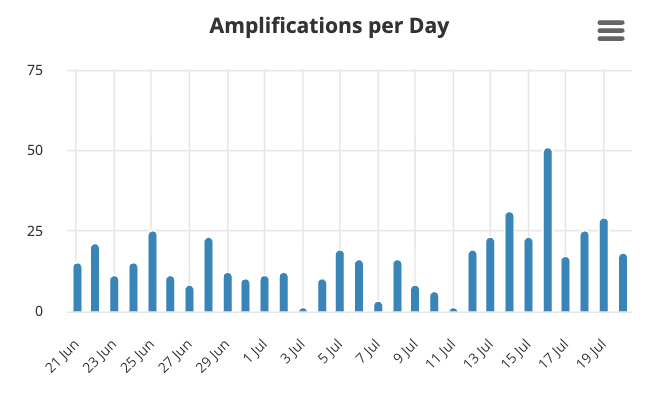
Daily amplification trends reveal periods of heightened attention toward AI market risks, with the largest spike occurring mid-July.
This spike occurred amid growing concerns over valuations, infrastructure spending, and AI investment sustainability. Tracking amplification provides an early indicator of how narratives may influence investor confidence and perceptions of U.S. AI competitiveness.
This report examines competing narratives surrounding the AI bubble and assesses their evidentiary basis, strategic origins, and potential economic implications. Specifically, by leveraging Narrative Intelligence (NARINT), it seeks to answer three research questions:
The AI market exhibits bubble-like characteristics, including elevated valuations, market concentration, and financing risks. The Bank for International Settlements warns that AI-related debt and circular financing could create systemic vulnerabilities, while firms such as TSMC, Meta, Micron, and Samsung continue to report strong earnings and sustained AI demand. EdgeTheory found that highly amplified bearish narratives emphasize financial risks while giving less attention to these countervailing indicators.
Bearish narratives undermine confidence in Western AI markets, while bullish narratives promote China's AI ecosystem and Asian investment opportunities. Together, these narratives reinforce perceptions of China's technological leadership while weakening confidence in Western competitors.
Persistent claims of an imminent AI collapse may influence investment decisions, financing costs, and confidence in U.S. technology markets.Highly amplified, one-sided narratives can become self-fulfilling by shaping investor sentiment and, in turn, influencing market outcomes. Without persistent monitoring, it is possible that large-scale market shifts could be driven by narratives and consumer/investor confidence rather than real-world market data.
This assessment relied on two primary analytic workflows within the EdgeTheory platform to determine the veracity of AI bubble claims, identify the actors shaping the narrative environment, and assess potential implications for U.S. technological competitiveness and economic outcomes. Reporting and social media data from commercial, market intelligence, and adversarial information environments were aggregated into Watches and automatically structured into narrative clusters for analysis. These workflows combined quantitative narrative scores, emotional analysis, and network mapping to distinguish evidence-based market trends from sheer narrative amplification.
Highly amplified, one-sided narratives can become self-fulfilling by shaping investor sentiment and, in turn, influencing market outcomes.


Edgewatches created using AI bubble search terms within the GCA Social Media module.
The first workflow (left) determined whether the AI bubble claim is supported by evidence or not. The live preview confirms the query returned a robust dataset by displaying the number of matching sources, narrative items, top sources, and top matching content that formed the basis for subsequent NARINT analysis.
Workflow 2 (right) identified narrative actors and assessed strategic implications. Analysts created an EdgeWatch to aggregate reporting and social media content related to AI bubble narratives, automatically organizing the data into narrative clusters. The workflow combined Narrative Scores (Source Reliability, Factual Accuracy, and Likely to Incite), Veracity Assessment, Bear/Bull Narrative Mapping, Key Amplifications, and Connections analysis to distinguish evidence-based market reporting from speculative or amplified claims, identify the most influential actors and source networks, and assess how competing narratives shaped perceptions of AI market risk and U.S. technological competitiveness.
Narratives predicting an imminent AI bubble are widespread across financial and technology discourse. EdgeTheory analysis indicates the AI market exhibits several bubble-like characteristics, including elevated valuations, market concentration, rising debt, and capital expenditures that may be outpacing near-term commercial returns.
This analysis distinguishes evidence-based financial risks from narrative amplification. The strongest evidence comes from the Bank for International Settlements, which warned that AI-related debt structures and circular financing arrangements could create systemic financial risks. Reporting from Caixin Global, WION News, and China Daily similarly highlights elevated valuations, market concentration, capital expenditure pressures, and AI over-financialization.
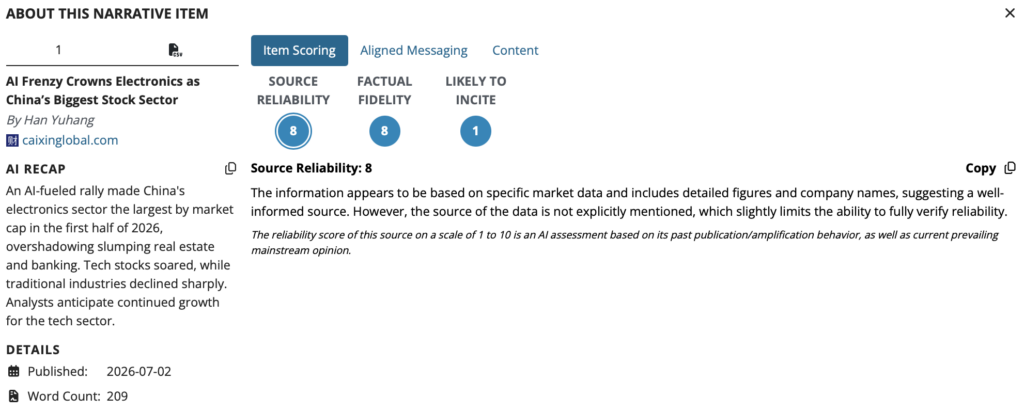
EdgeTheory Key Amplifier
EdgeTheory Key Amplifier from Caixin Global shows how EdgeTheory evaluates narrative quality. Despite high Source Reliability and Factual Fidelity scores, the analysis notes that some underlying market data is not explicitly attributed, limiting full verification.
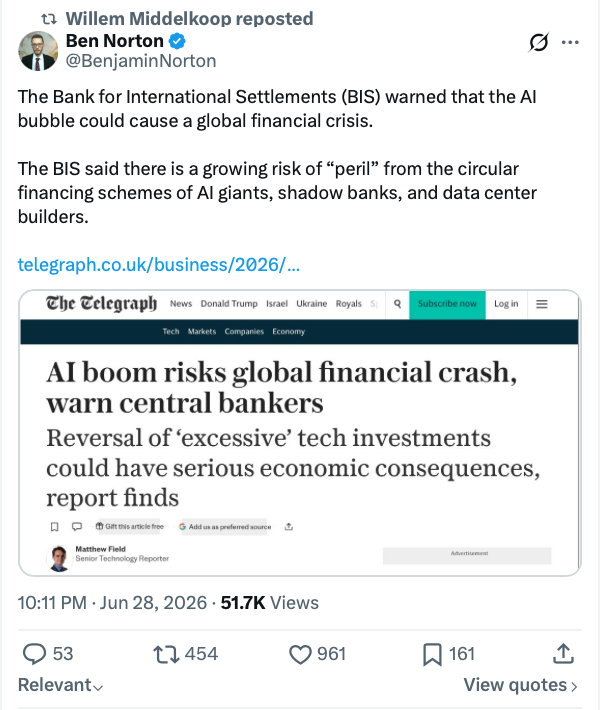
EdgeTheory Key Amplifier sourced X post amplifying warnings from the Bank for International Settlements
The BIS warning became a major amplification point within GCA Sources. It warns that excessive AI investment and circular financing between AI firms, shadow banks, and data center developers could create systemic financial risks. Key Amplifiers repeatedly cited the report to support claims that elevated AI valuations and financing practices could trigger an imminent market collapse, extending the BIS's more measured conclusions. Geopolitics & Empire, Rebecca Chan, Firstpost, and The Expose reinforce these concerns through comparisons to the dot-com and 2007 market crashes, but their claims rely primarily on historical analogy rather than new evidence demonstrating that a collapse is imminent.
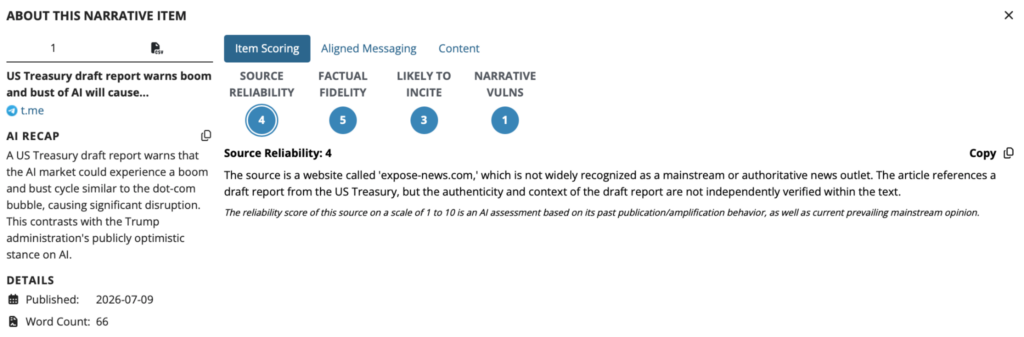
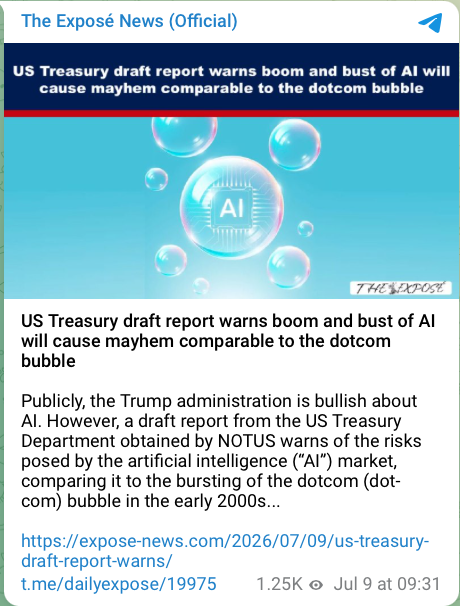
EdgeTheory's Key Amplifiers section identified a Telegram post framing the AI market through comparisons to previous financial bubbles and market crashes rather than providing current market fundamentals.
This post suggests that some narratives predicting an imminent AI collapse, while appearing to reference reliable sources, are merely speculative in nature.
Commercialization concerns discussed by commercial news providers promote additional support for the AI bubble claim. The Register and Business Insider report that firms including OpenAI and Oracle face losses, margin pressure, or difficulty demonstrating returns on infrastructure spending. CNBC, PC Gamer, AI Now Institute, and The AI Journal also highlight rising hyperscaler debt and slowing enterprise adoption. ExtremeTech and Red Hot News cite cases in which Ford, IBM, and other firms rehired workers after unsuccessful automation efforts, showing that some AI deployments have failed to meet expectations. While these examples indicate real commercialization and adoption challenges, they are not sufficient on their own to demonstrate a market-wide reversal, as major AI firms continue to invest heavily in infrastructure and the sector remains supported by substantial capital spending.

EdgeTheory Key Amplifier: Commercialization is emerging as one of the strongest indicators of whether AI investments are sustainable.
Geopolitics & Empire, Rebecca Chan, Firstpost, and The Expose reinforce these concerns through comparisons to the dot-com and 2007 market crashes, but their claims rely primarily on historical analogy rather than new evidence demonstrating that a collapse is imminent.
Reports of rising infrastructure costs, slowing enterprise adoption, and isolated failures of AI automation efforts suggest that some firms are struggling to generate returns on AI spending. While these challenges do not indicate a market-wide collapse, they do support the assessment that the long-term success of the AI sector will depend on its ability to deliver measurable economic value rather than continued capital investment alone.
EdgeWatch compiled a list of technical limitations and identified hallucinations, poor-quality outputs, and software errors appear in reporting from ExtremeTech, TechCrunch, and TechTarget, but they remain secondary to financial concerns. Meanwhile, the weakest evidence for an AI bubble comes from Anthropic’s risk-focused marketing, which reflects public anxiety rather than measurable financial deterioration. Reporting on the campaign reflects high reliability and factuality scores merged with informal tones, suggesting AI bubble narratives are sometimes amplified through public perception and branding rather than objective indicators of market instability.

EdgeTheory Key Amplifier: Anthropic's marketing campaign highlights growing public anxiety surrounding AI risks, but it does not provide evidence of underlying financial or technological weaknesses in the AI market.
By integrating multiple source networks into a persistent NARINT monitor, EdgeTheory identified the principal analytic gap: insufficient independent data to distinguish a speculative valuation cycle from a broader AI market collapse. NARINT identified the most reliable indicators of AI market sustainability as AI-sector debt exposure, circular financing, revenue growth, measurable economic value, and capital expenditure trends. Together, the evidence suggests the AI market faces meaningful valuation and financing risks, but the timing and severity of any correction remain uncertain. Expanding EdgeWatch to monitor these indicators individually, rather than collectively, would provide more targeted analysis and help distinguish evidence-based risks from amplified market narratives.
Some narratives predicting an imminent AI collapse, while appearing to reference reliable sources, are merely speculative in nature.
Our analysis identified that bearish messaging is overwhelmingly driven by Chinese state media, Chinese hedge funds, and Russian-aligned geopolitical commentators, while bullish narratives are primarily promoted by Chinese think tanks and Asian financial media emphasizing long-term AI-driven economic growth. Bearish actors include Chinese hedge funds such as Wealspring Asset and Shanghai Banxia Investment Management Center, which have warned about a "super bubble" in AI stocks and believe the collapse point may not be far away due to unsustainable valuations and revenue growth pressures among AI companies.
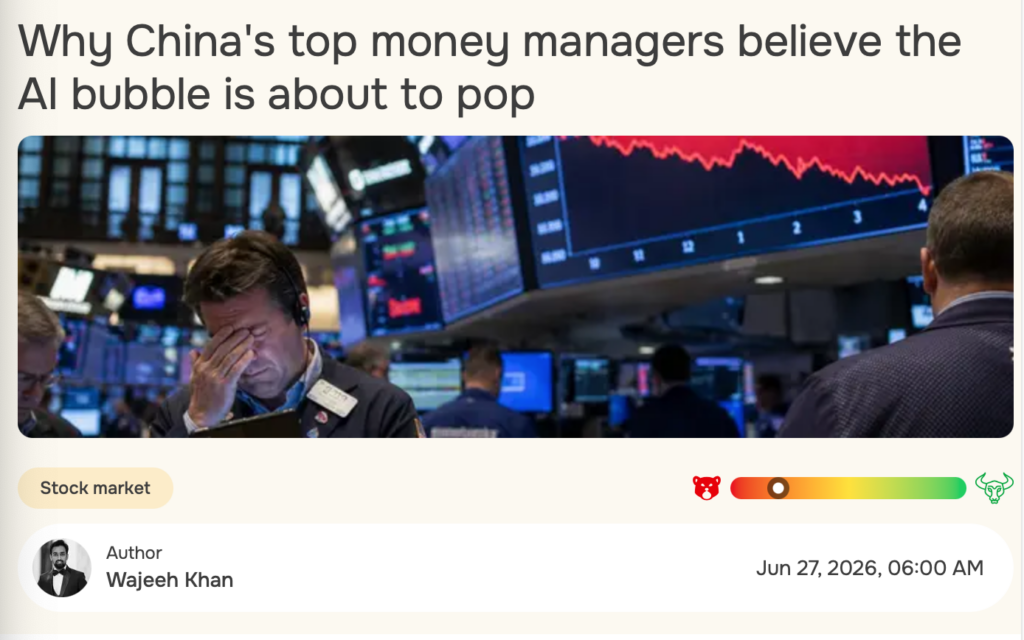
Chinese hedge funds are among the most influential actors amplifying AI bubble narratives.
These sources frame U.S. AI markets as financially unsustainable while promoting China's AI ecosystem as a more resilient alternative. Their warnings have been widely cited across financial and geopolitical media, shaping perceptions of elevated risk in Western AI investments.
Debt narratives contribute to growing skepticism surrounding the sustainability of AI capital expenditures and reinforce perceptions that financial risks extend beyond individual companies to the broader technology ecosystem.
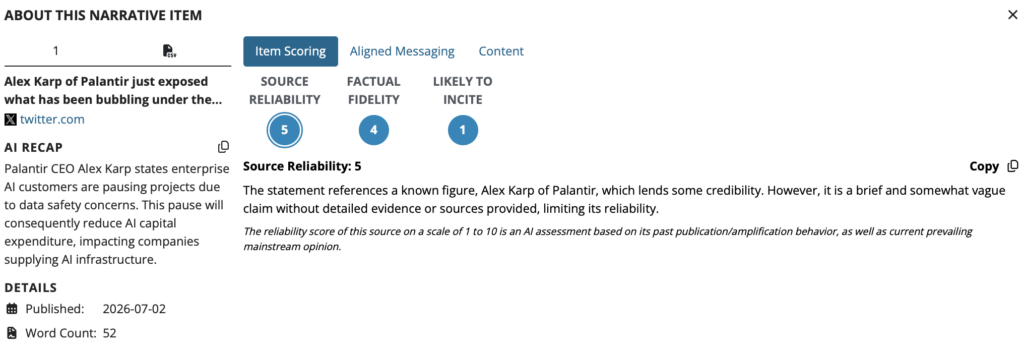
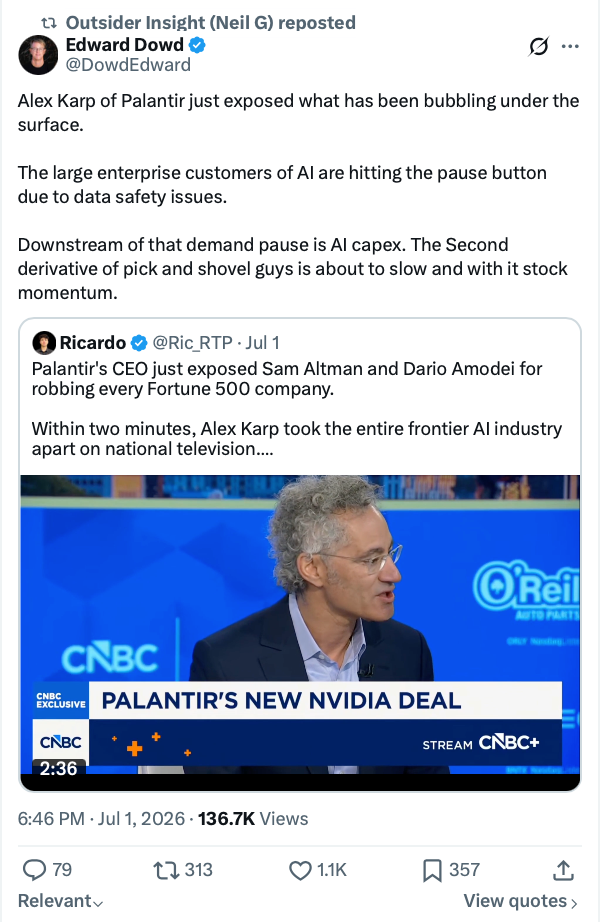
EdgeTheory Key Amplifier: Alex Karp's comments suggest that enterprise demand may be the strongest indicator of AI market sustainability.
If large customers delay AI deployments due to data security and cost concerns, capital expenditures, data center investments, and broader AI infrastructure development could slow. While this reporting supports a bearish outlook, some outlets amplify these concerns to argue that the entire AI market is headed for collapse.

EdgeTheory Key Amplifier: Independent media outlets are amplifying concerns that AI-related debt and financing practices may create vulnerabilities in hyperscaler and infrastructure markets.
This Key Amplifier by “Tyler Durden” highlights how debt narratives contribute to growing skepticism surrounding the sustainability of AI capital expenditures and reinforce perceptions that financial risks extend beyond individual companies to the broader technology ecosystem.
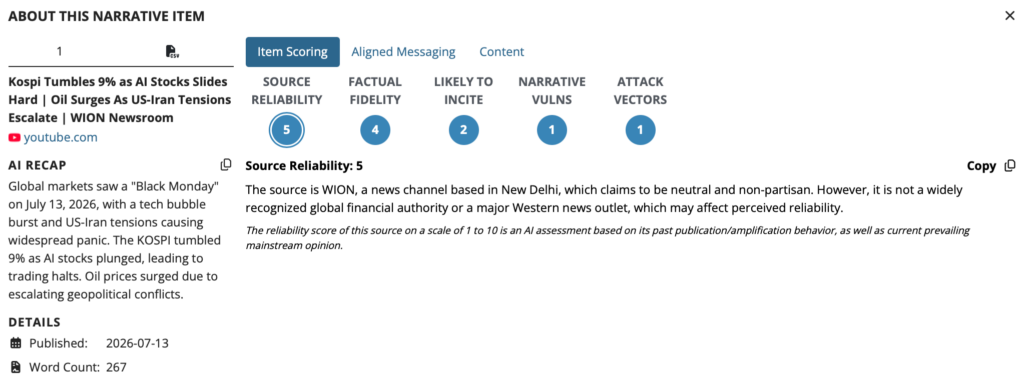

EdgeTheory Key Amplifier: Market commentators are increasingly questioning whether Big Tech's AI spending is generating meaningful returns.
These sources frame Western AI markets as over-financialized and vulnerable to correction while positioning China's open-source AI ecosystem as a more sustainable alternative. They argue that large AI investments may not translate into proportional productivity gains, reinforcing concerns that portions of the current AI boom are driven more by market expectations than realized economic value.
Bullish narratives include China Daily and Caixin Global, who portray AI as a transformative technology driving continued economic and market growth. They argue that strong corporate earnings and balanced investment support indicate the AI boom remains sustainable rather than speculative.

EdgeTheory Key Amplifier: Caixin Global's reporting shows that strong earnings and continued investment are supporting China's AI-driven technology sector.
This narrative challenges claims of an imminent AI bubble burst by suggesting that portions of the AI market are being driven by underlying economic fundamentals rather than speculation alone. Such China-aligned sources imply that successful AI-sector growth requires continued state-investment and direct governance.
Such China-aligned sources imply that successful AI-sector growth requires continued state-investment and direct governance.
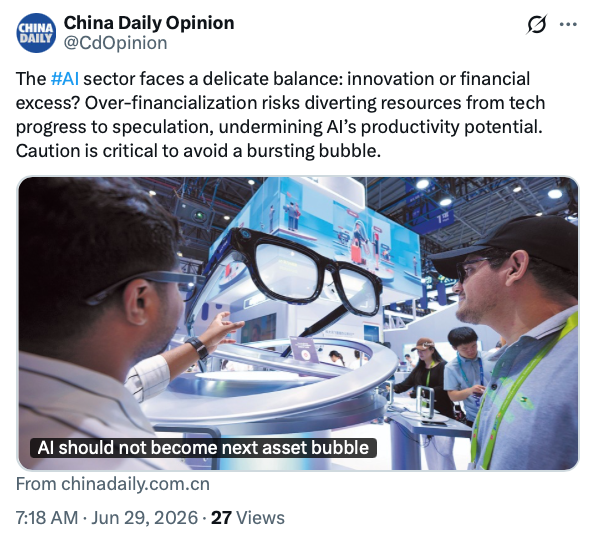
EdgeTheory Key Amplifier: AI risks over-financialization, where speculation outpaces innovation and increases bubble risk.
The Center for China and Globalization focuses on stable U.S.-China economic relations and highlight the importance of cooperation and cautious optimism around AI governance and development. Commentators on the Silk and Steel Podcast, who analyze China's AI breakthroughs and openness in AI innovation, arguing that China’s competitive cost advantage and rising open-source ecosystems position it strongly in the future AI landscape. Their podcast episode on July 1st, 2026, generated 114,664 views, and 4,900 likes, demonstrating substantial audience engagement.
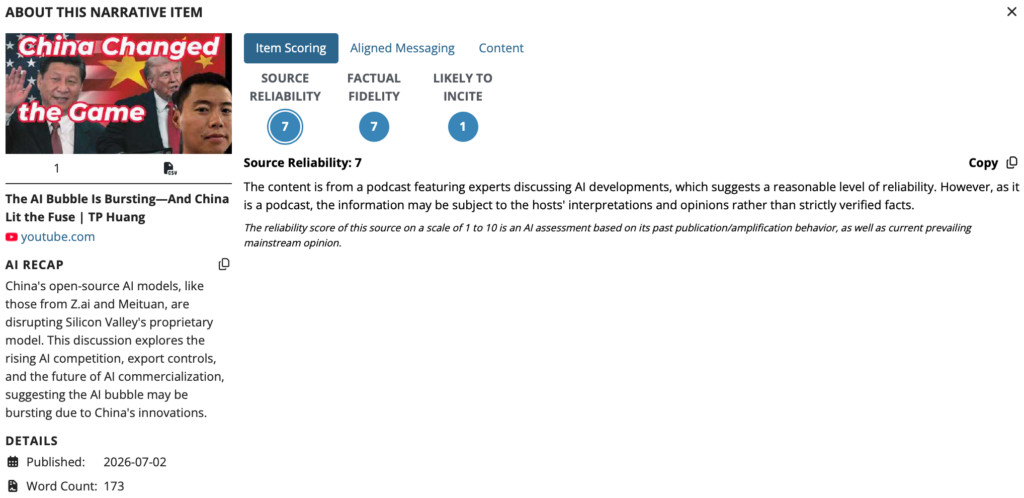
EdgeTheory Key Amplifier: China's open-source AI ecosystem is emerging as a key competitive challenge to Silicon Valley's proprietary AI model.
These narratives suggest that the future of AI leadership may be determined less by who spends the most on infrastructure and more by who can deliver the most cost-effective and scalable models, positioning China as a potential long-term beneficiary of shifts in global AI investment.
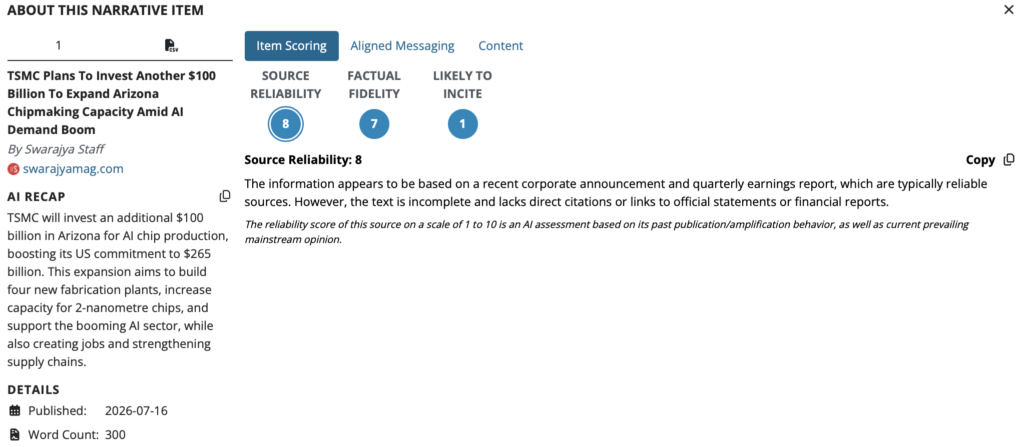
EdgeTheory Key Amplifier
TSMC's continued expansion of semiconductor manufacturing capacity provides tangible evidence that major industry players are making long-term investments based on sustained AI demand.
These narratives suggest that the future of AI leadership may be determined less by who spends the most on infrastructure and more by who can deliver the most cost-effective and scalable models, positioning China as a potential long-term beneficiary of shifts in global AI investment.
These sources characterize AI as a structural driver of economic growth and investment opportunities, particularly within Asian markets. These investments suggest that portions of the AI boom are supported by underlying economic fundamentals and expected future growth rather than speculative market enthusiasm alone. Notably, even optimistic narratives are largely centered on China's comparative advantages rather than broad support for U.S.-led AI development.
This NARINT analysis demonstrates that the AI bubble debate extends beyond financial markets into a geopolitical competition over technological leadership and investment flows. Chinese-aligned sources repeatedly amplify hedge fund warnings, stock market statistics, and historical bubble comparisons while omitting countervailing evidence, such as continued Western AI investment and enterprise adoption.
This pattern suggests an effort to undermine confidence in Western AI markets while promoting Chinese AI models and Asian investment opportunities. Policymakers and investors should therefore assess not only financial indicators but also how foreign actors use market narratives to shape perceptions of U.S. technological competitiveness. The emotional environment surrounding AI bubble narratives reinforces these dynamics, shaping perceptions of economic risk, technological leadership, and market stability.
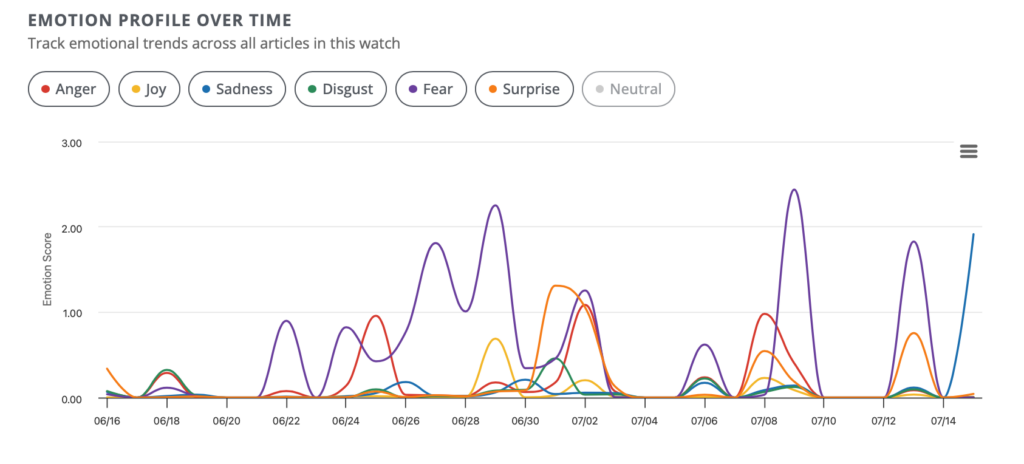
EdgeTheory Emotional Profile Classifier
These narratives suggest that the future of AI leadership may be determined less by who spends the most on infrastructure and more by who can deliver the most cost-effective and scalable models, positioning China as a potential long-term beneficiary of shifts in global AI investment.
Fear is the dominant emotion driving AI bubble narratives throughout the reporting period, with the largest emotional spikes occurring on June 29, July 9, and July 13. Fear-based narratives consistently outperform other emotional framings and are primarily associated with warnings of an impending AI bubble burst, systemic financial instability, and concerns over excessive capital expenditures and debt financing.
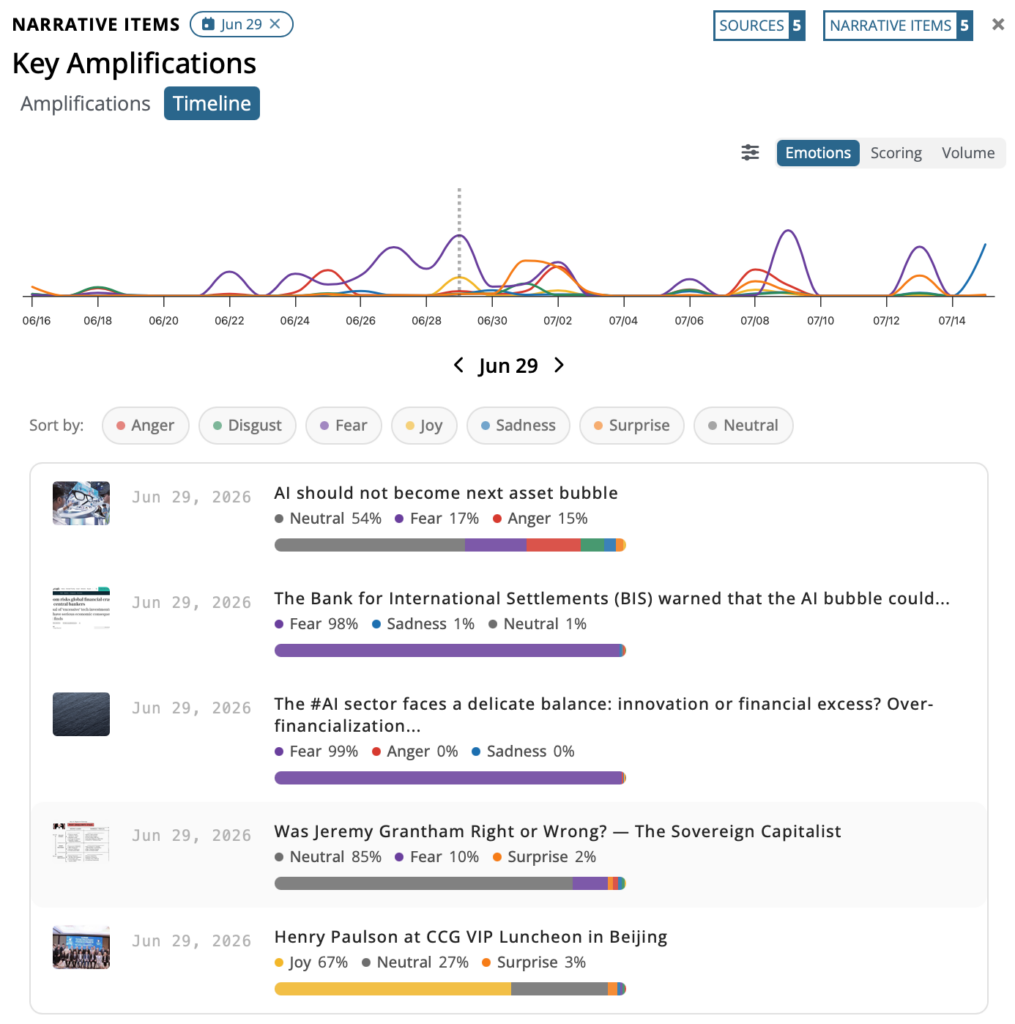
EdgeTheory Emotional Profile Classifier
The June 29 spike was driven by reporting on the Bank for International Settlements' warning that AI-related debt and circular financing arrangements could pose systemic financial risks. Additional narratives framed AI as the next asset bubble and questioned whether financialization is outpacing innovation.
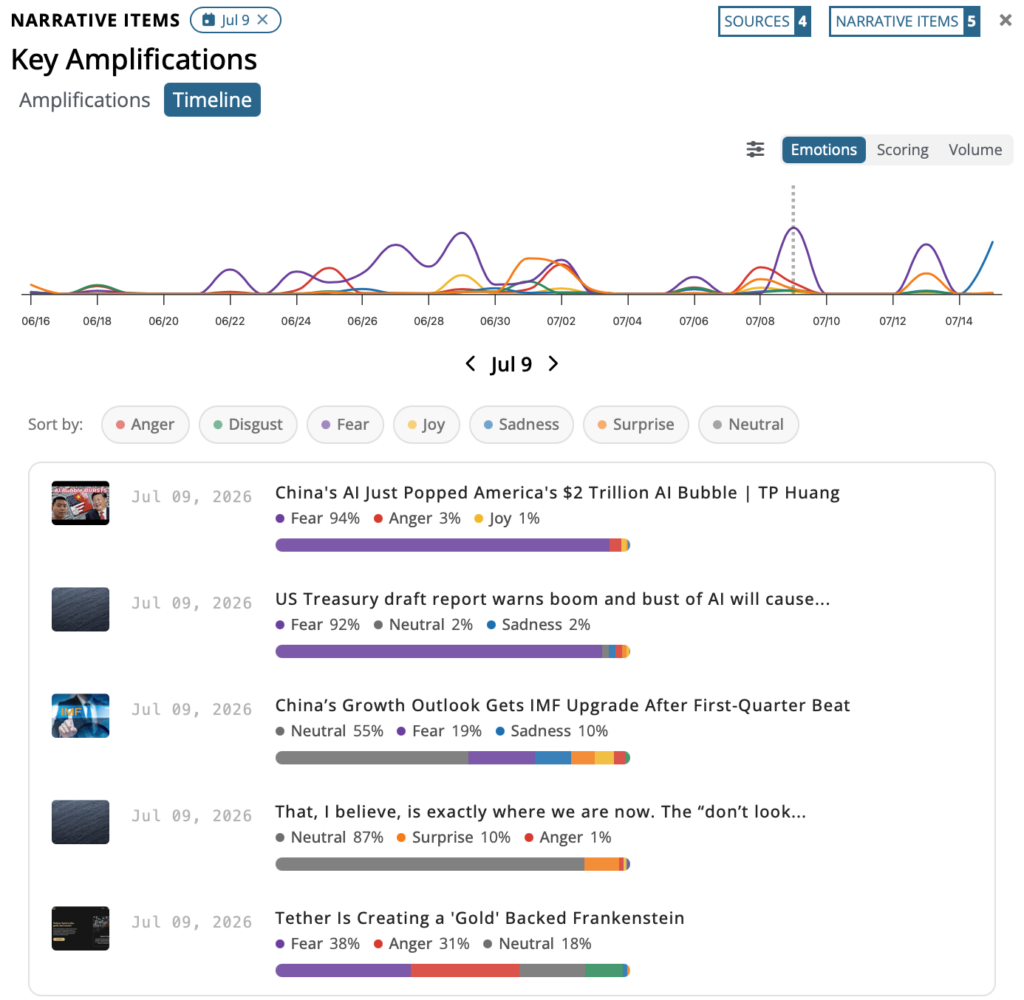
EdgeTheory Emotional Profile Classifier
The July 9 spike similarly coincided with narratives claiming that China's AI ecosystem had "popped" America's AI bubble and that a leaked U.S. Treasury report warned of dot-com-like financial consequences, reinforcing perceptions of declining U.S. technological leadership and economic vulnerability.
The July 9 spike similarly coincided with narratives claiming that China's AI ecosystem had "popped" America's AI bubble and that a leaked U.S. Treasury report warned of dot-com-like financial consequences, reinforcing perceptions of declining U.S. technological leadership and economic vulnerability.
Fear is amplified primarily through three influence tactics: (1) invoking authoritative institutions to legitimize economic concerns, (2) drawing historical analogies to the dot-com bubble and previous financial crises to suggest an inevitable market collapse, and (3) framing China's AI advancements as evidence that the United States is losing the global AI race. While joy and surprise appear periodically in reporting on China's economic growth and AI investment opportunities, these emotions are significantly less prevalent than fear-based narratives.
The AI boom is likely to continue driving U.S. economic growth in the near term, but elevated valuations and concentrated investments in AI-related equities create vulnerabilities for both the stock market and broader economy.
The AI bubble narrative is only partially supported by the available evidence. While the AI sector faces legitimate financial and infrastructure risks, claims of an imminent collapse are largely driven by speculative forecasts and historical comparisons rather than definitive market indicators.
The debate over the AI bubble is also a geopolitical competition over technological leadership and investment. Foreign actors are actively shaping perceptions of Western AI markets while promoting alternative AI ecosystems.
The debate over the AI bubble is also a geopolitical competition over technological leadership and investment. Foreign actors are actively shaping perceptions of Western AI markets while promoting alternative AI ecosystems. These narratives have the potential to influence investor confidence, capital allocation, and perceptions of U.S. competitiveness. As AI continues to reshape the global economy, distinguishing evidence-based risks from narrative-driven claims will be critical for making informed investment, economic, and policy decisions. The outcome of the AI investment cycle will influence more than financial markets. A sustained downturn in Western AI investment could accelerate China's relative gains in open-source AI and digital infrastructure, while continued enterprise adoption would reinforce U.S. leadership in frontier AI development. The trajectory of the AI bubble is therefore likely to shape the next phase of global technological competition.

